
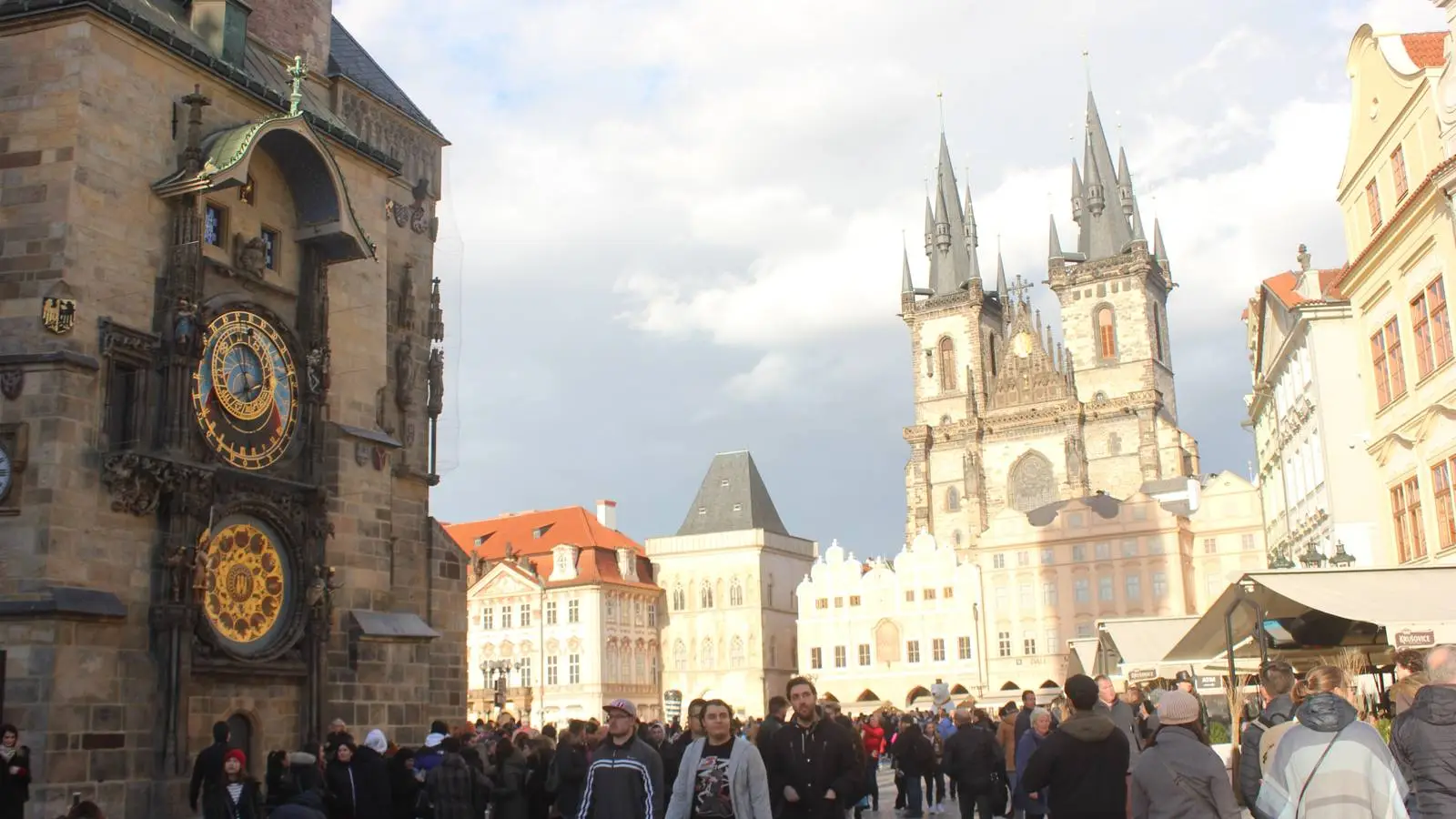
Discover Prague’s Astronomical Clock on Old Town Square: its 600-year history, myths, mechanics, hourly apostle show, and tips for visiting the tower.
Every hour a crowd gathers on Prague’s Old Town Square. People fall still and look up—then figures of the apostles glide into view, a skeleton with an hourglass stirs the mechanism, and a rooster cries overhead. It’s all part of the show the city’s famous clock has been staging for more than 600 years. It’s not just a timepiece; it’s a pocket-sized theater that marks the hour and hints at the city’s story.
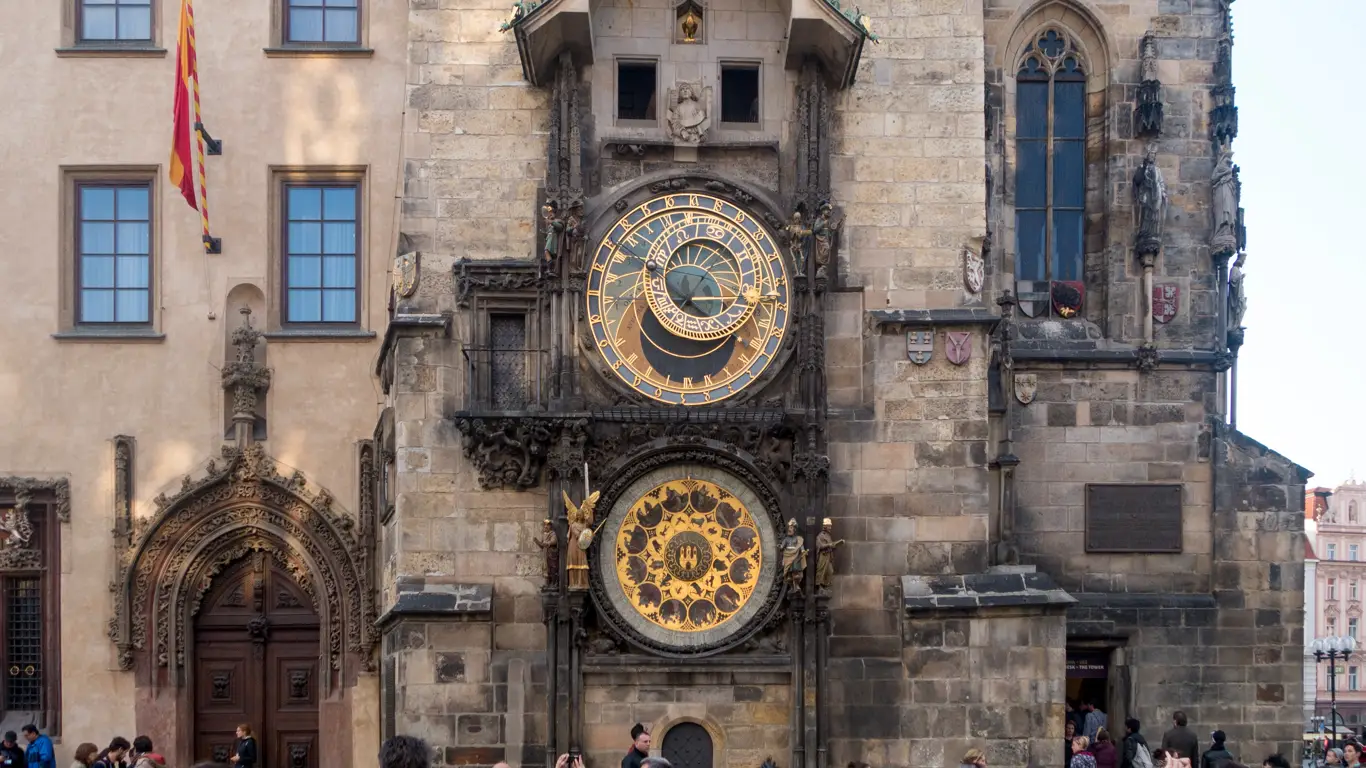
The Prague astronomical clock was mounted on the town hall in 1410. It was created by the clockmaker Mikuláš of Kadaň and professor Jan Šindel. They built not just a clock but a complex mechanism that shows the positions of the Sun, the Moon, and the zodiac. Later, at the end of the 1400s, a calendar disc with month scenes was added. In the 1800s, figures of the apostles appeared and became central to the hourly display.
A well-known legend insists its maker was blinded so he could never replicate the clock elsewhere. Historians have shown that this master never existed.
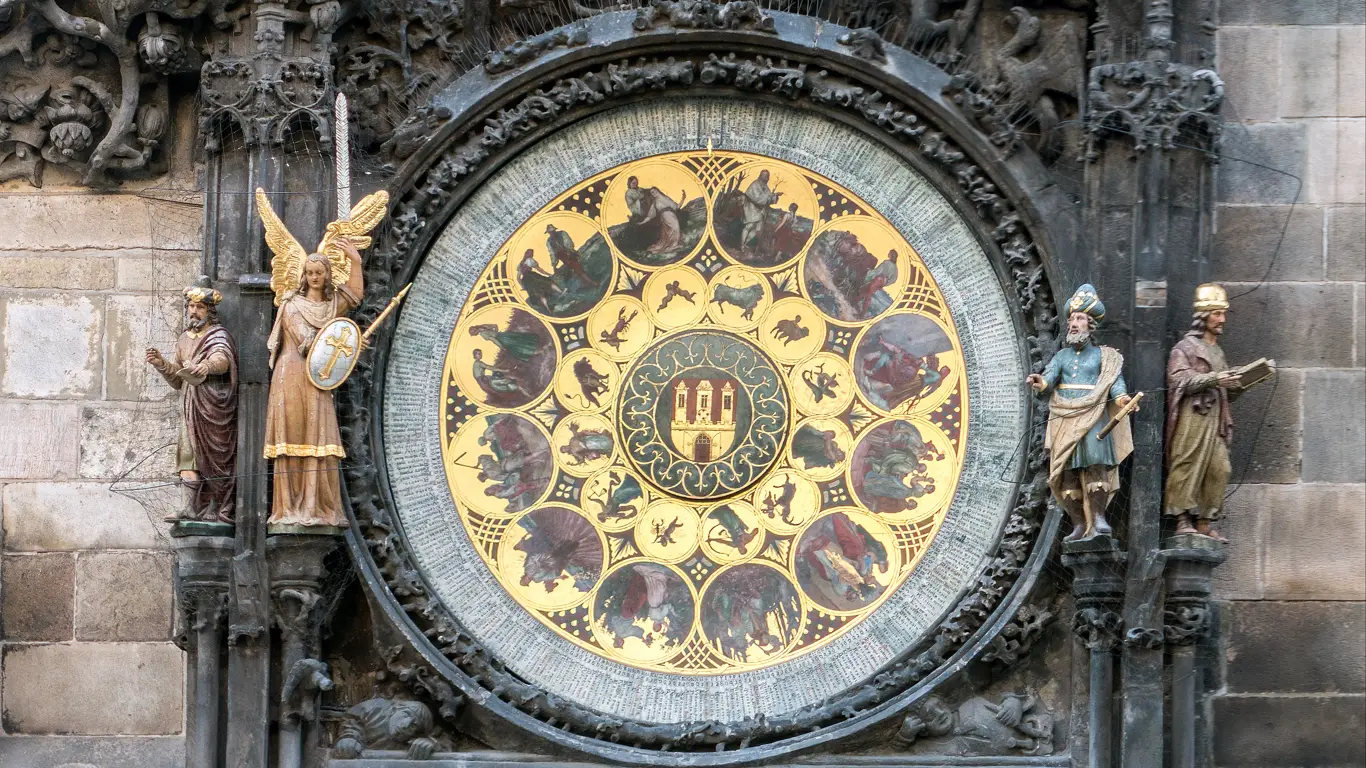
The clock is made up of three main parts. First is the dial that shows not only the time but also the movement of the Sun and Moon across the sky. Second is the calendar, decorated with images of the months. Third is the procession of figures that appears every hour from 9 a.m. to 11 p.m.
When the moment comes, a skeleton—symbolizing Death—pulls a rope. In the small windows, the apostles begin to move. A rooster crows, and the clock strikes the hour. The whole vignette lasts just a minute, yet hundreds of people watch it every day—it’s easy to see why.
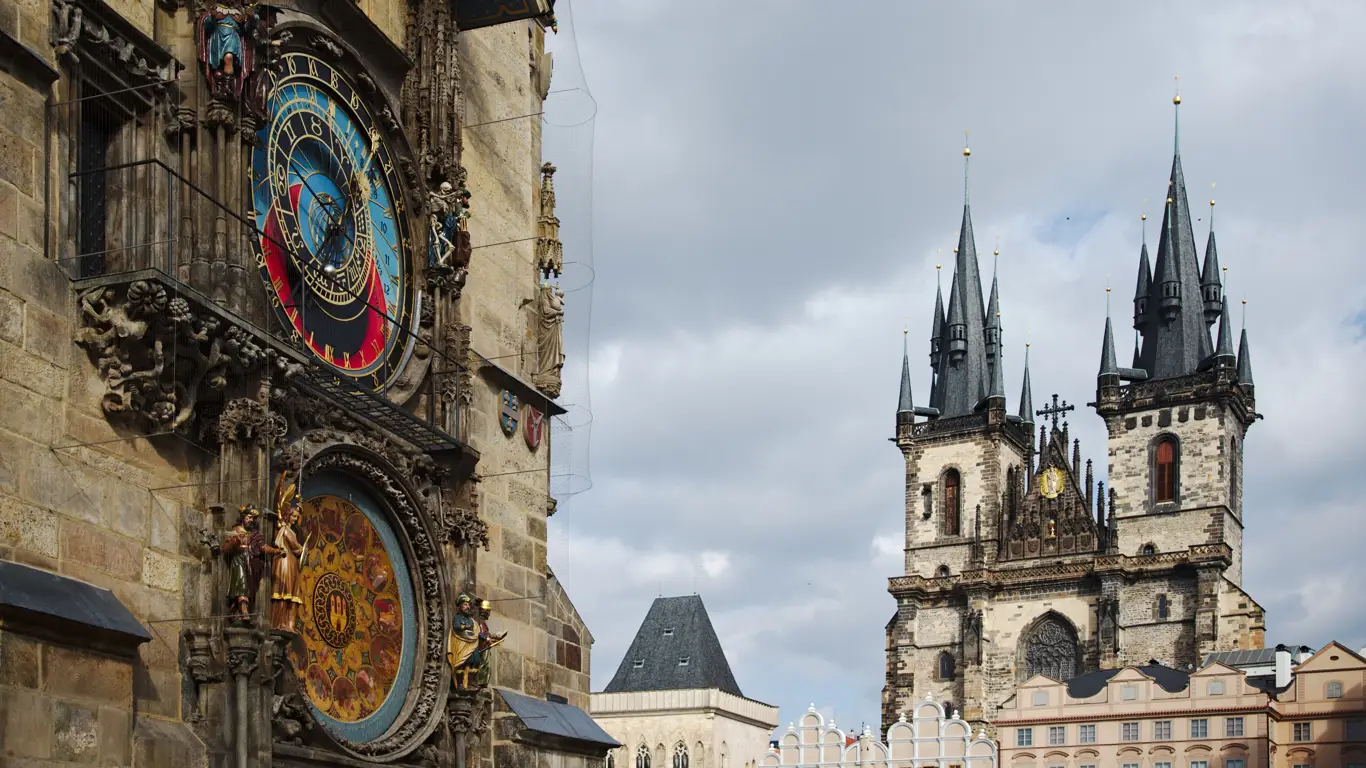
Myths have gathered around the clock. One says that if it ever stops, misfortune will strike the city. There were indeed such moments: during World War II the clock was damaged and fell silent. After it was restored, it came back to life and has been running without interruption since.
Another popular belief holds that the zodiac signs on the clock can reveal a person’s character. That has never been proven, of course, yet visitors still study the symbols with real curiosity.
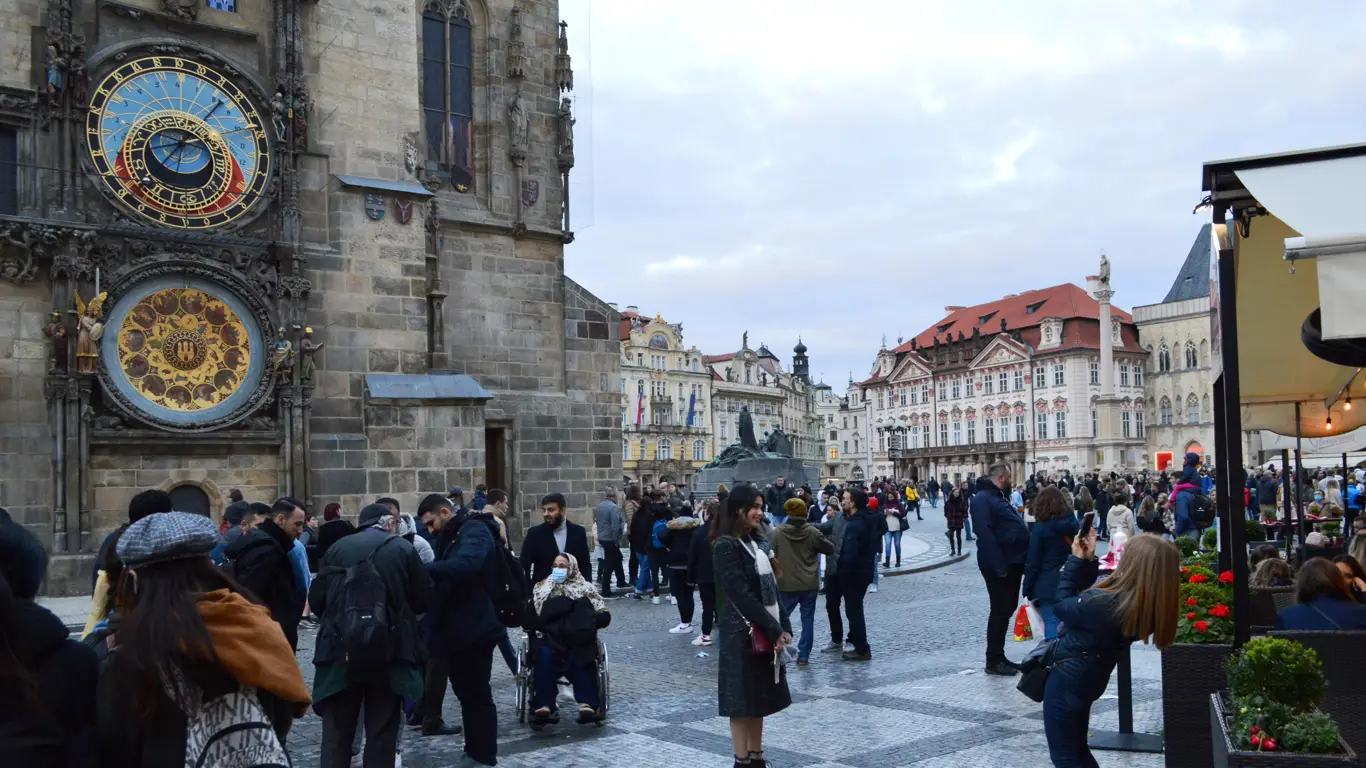
Today the clock works much as it did centuries ago. In 2018 it underwent a full restoration. The mechanism is in good condition and carefully watched over. Tourists can climb the town hall tower, look out across the city, and even see how this unusual clock is arranged inside.
In a digital age when everyone carries a smartphone, Prague’s clock is no longer needed to tell the hour. It has become something more—a piece of history, a cultural symbol where science, art, and legend meet. And every hour, when the apostles step into their windows again, it’s a quiet reminder that even old things can stay vivid and compelling.