
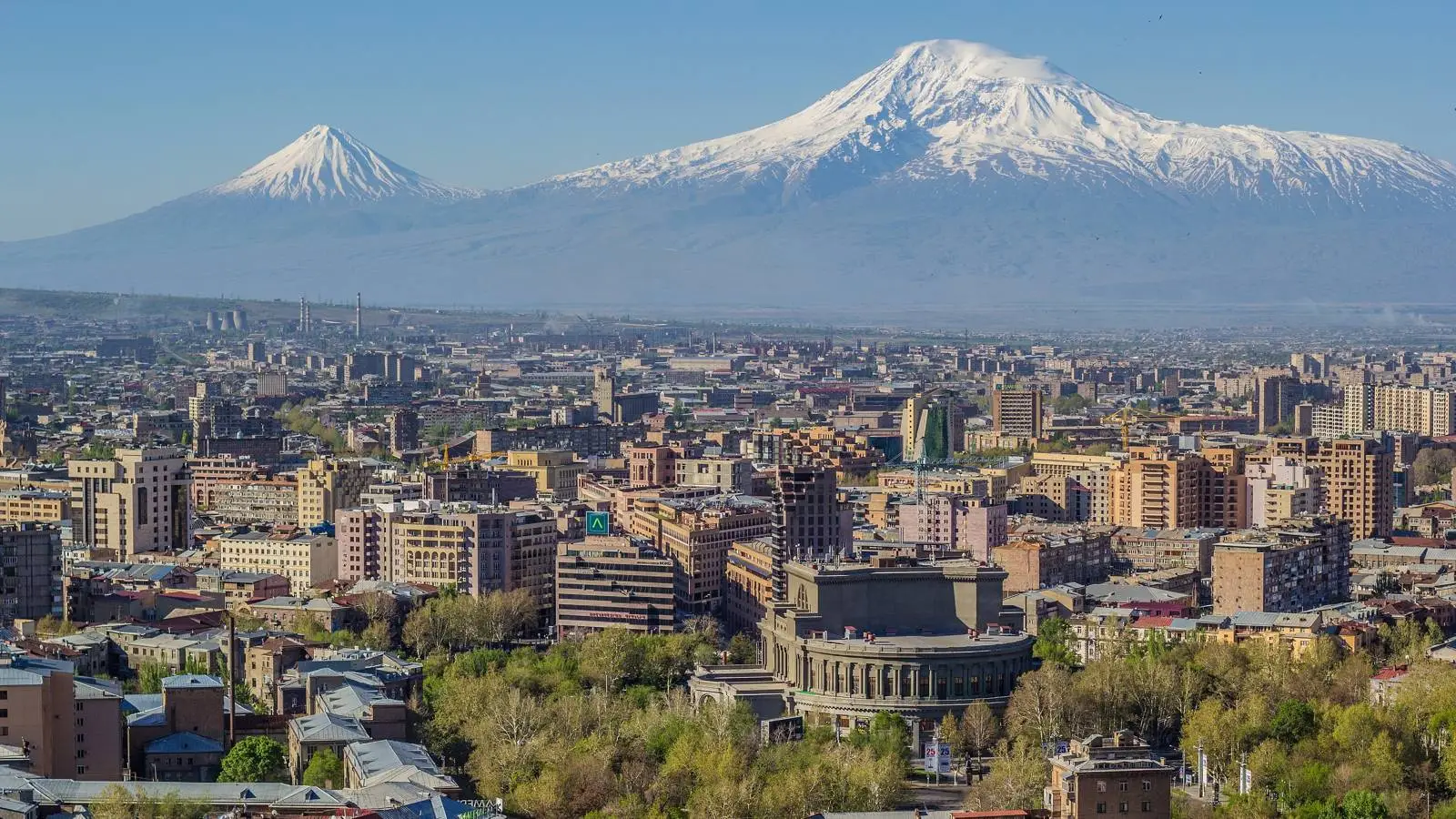
Explore Yerevan’s soundscape: traffic, honking, concerts, and late-night buzz. How noise shapes daily life—and whether the city can turn the volume down.
Close your eyes and picture yourself in the heart of Yerevan. It’s summer; the heat shimmers in the air. A car horn pierces the distance, then another. Somewhere a street coffee grinder rasps, followed by a waiter’s voice and the clink of glasses. Engines, footsteps, conversations, music—this is the city’s soundtrack. Yerevan doesn’t just live; it resonates. And that soundscape is increasingly on residents’ minds.
Noise is the complaint Yerevanites voice most often. In 2023, a university survey of people living in the city’s most densely populated districts asked what gets in the way of daily life. Almost everyone pointed to two chief irritants: traffic and incessant honking—by day and at night alike.
It’s especially loud downtown: cars, amplified music, concerts, and a dense web of cafes keep the volume up. People say that even with the windows shut, the street still seeps into their homes.
Yerevan is a city of heavy traffic and ranks first nationwide for road congestion. An average trip across town takes about nine minutes despite the city’s modest size. That translates into bottlenecks, constant stops—and, inevitably, horns.
In news reports and blogs, there’s a growing refrain that in Yerevan half the day disappears into getting from A to B. Residents add that you can’t advance without honking, that everyone is in a hurry, and that tempers are frayed. In that observation lies the city’s essence: it is always rushing.
Many say the noise wears them down. Some struggle to sleep, others to concentrate. Those living near the main arteries feel it most. In 2024, some residents of central neighborhoods complained about late-night concerts, street events, and music from venues—too loud and too late.
Armenian officials have even floated tougher rules and fines for excessive noise, though for now it remains a matter of debate. Tellingly, the last official noise map of Yerevan’s districts was updated back in 1976. Since then—silence, in every sense.
The fatigue is compounded by a sense of powerlessness. The same study notes that most respondents believe the situation can’t be changed, which only sharpens the irritation. You’re tired—and you don’t know how to help yourself.
Meanwhile, the city’s website labels Yerevan’s noise and light levels as average. A short stroll through the center quickly shows how easily that average spills beyond comfort.
There is hope that things will improve over time. Officials are already discussing new rules and talking about a modern noise map to pinpoint the loudest areas. Concrete action, however, remains scarce.
If nothing changes, the noise will only grow. The city is getting busier, with more cars and more events—and therefore, more volume.
Still, it isn’t so black and white. Yerevan’s noise is more than a nuisance; it’s rhythm and pulse. It is street life, movement, energy. It grates—and it draws you in. It’s part of the city’s character.
Even if you’ve never been, you can catch its mood by watching a walking video with live sound: footsteps, conversations, passing cars. That is Yerevan—less a postcard than a lived-in place.
Today, the city feels like a jazz line—sometimes loud, sharp, even chaotic, but never dull. The only open question is whether Yerevan can ever learn to play its music a little softer.