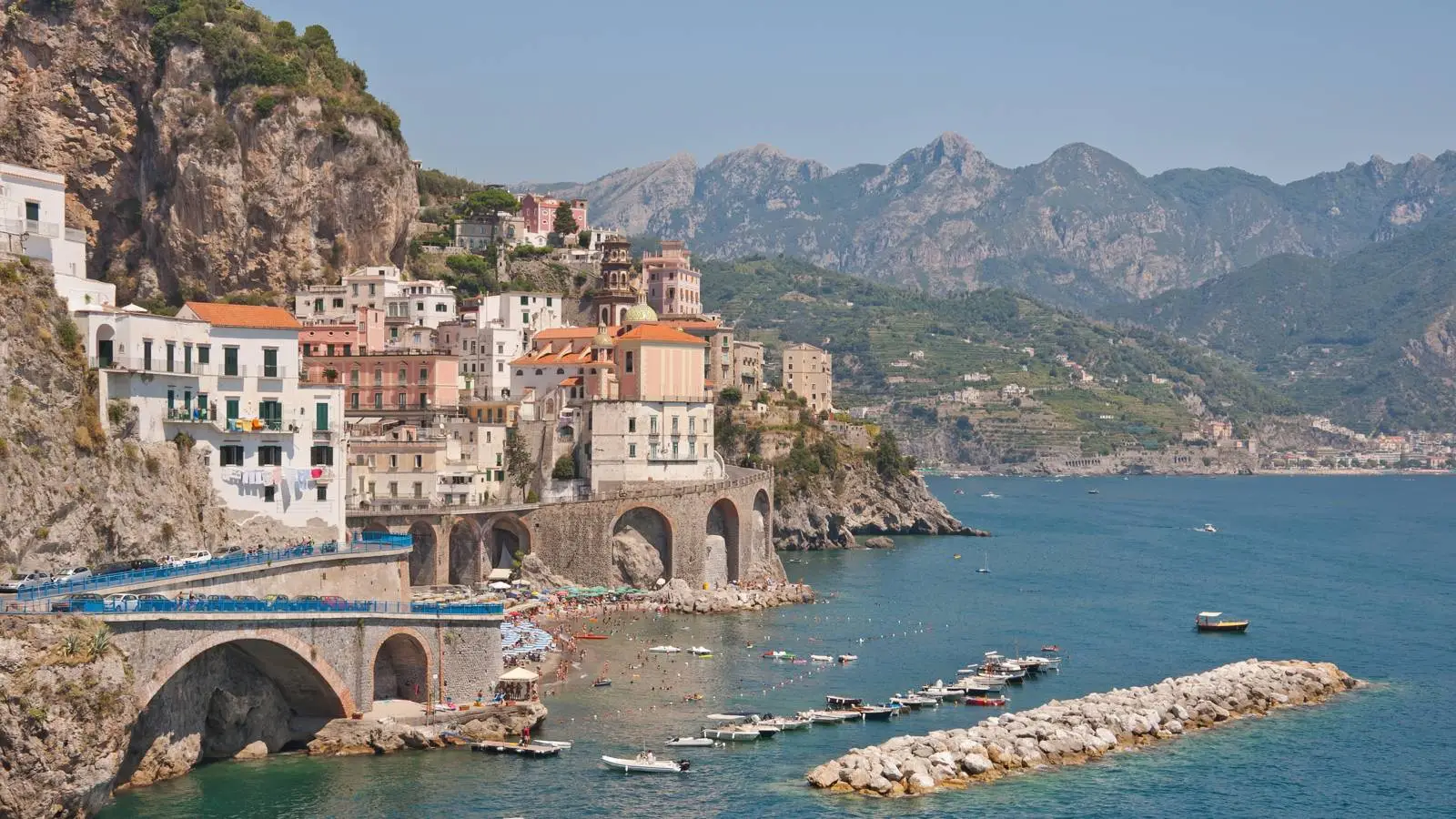
Explore Amalfi Coast architecture: cliffside towns, Roman terraces, stair-like streets, and pressures. See how vertical design adapts to a rugged landscape.
The Amalfi Coast in southern Italy often lands in travel guides: turquoise sea, sheer cliffs, and snug towns that seem glued to the mountains. Yet beyond the postcard gloss lies something else. Here, homes don’t just sit—they climb up the slopes as if reaching for the sky. How did it end up this way? And what about these places wins over even those who don’t usually care about architecture?
There’s little flat ground along the coast. Almost everything is rock and steep inclines. So towns like Positano, Amalfi, and Ravello didn’t spread sideways like most cities—they grew upward. From below, the houses appear to hover over one another, and many streets feel more like staircases.
This building method was a necessity: the mountains left no choice. The result is vertical cities where every last meter of space is put to work.
The Romans were the first to settle here. As early as the first century CE, they built lavish villas along the coast—in Minori, Positano, and on nearby islands. To set a structure on a slope, they had to level the ground, creating stepped terraces that became the base for the houses.
Much of the work was done by hand. The land was leveled by laborers—often enslaved people or those who had been freed.
In towns like these, conventional streets are rare. You move by stairs, and a balcony on one home can double as the roof of another. It creates the feeling that the whole city was assembled like a puzzle—upright.
Today, architects still design buildings to blend into the mountains rather than stand apart. One example is Torre Positano, a villa regarded as one of the most prestigious on the coast.
More tourists arrive each year. On the one hand, that’s good for the economy. On the other, it puts pressure on aging buildings and infrastructure. At times, new construction or renovation can dent the towns’ appearance or alter their character.
The architecture of the Amalfi Coast is more than beautiful scenery. It shows how people can adapt to a difficult landscape without undoing it. For centuries, residents learned to live where you couldn’t build simply or straight. They figured out how to make houses grow on cliffs—and did it in a way that feels sturdy, graceful, and practical.