
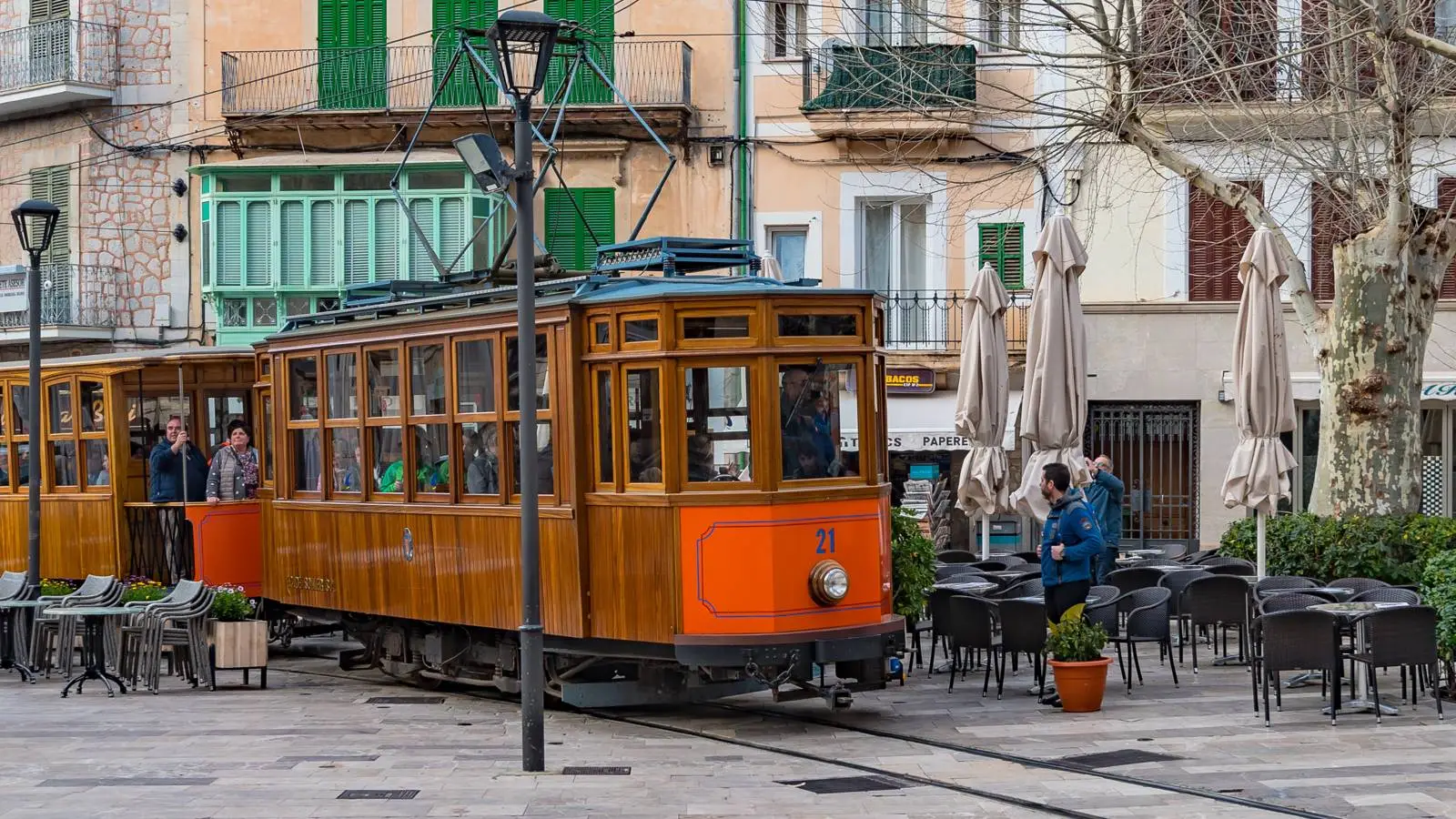
Discover the vintage Soller tram in Mallorca, running since 1913 from town to Port de Soller. Wooden cars, citrus groves, and local life in a slow, scenic ride.
In northern Mallorca, among orange groves and mountains, a genuine vintage tram has been running for more than a century: the line from the town of Soller to its port. It entered service on October 4, 1913, and has barely changed since. The route still carries passengers along the same track, just under five kilometers long.
The tram was conceived and designed by an engineer named Pedro Garau. In the early 20th century, he set out to make it easier to move cargo and passengers between Soller and its seaport. Back then the rails carried not only people but also crates of fish and coal, and in wartime even shells and torpedoes.
Its track gauge is just under a meter.
It runs on electricity.
It moves at an unhurried pace, topping out at 25 km/h.
The cars are still wooden, just as they were. Some are true survivors from 1913. Later, more cars arrived from Lisbon, rebuilt to suit local conditions.
The ride begins in the center of Soller. First the tram glides past historic buildings, then threads between orange and lemon trees, crosses a bridge over a mountain river, and eventually rolls straight to the sea, into the Port of Soller. There are 17 stops in total; you can hop off at any of them and continue on foot. It’s the kind of route that nudges you to watch the scenery, not the clock.
Although the tram is a favorite with visitors, locals still rely on it—for commuting, school runs, and market trips. It runs every day and doesn’t answer to traffic jams, which is part of its quiet appeal.
In 2025, Soller’s authorities began restricting parking for rental cars as residents grew weary of the tourist influx. Visitors are now encouraged to switch to public transport—and the tram has become especially useful again. It helps ease the streets and, just as importantly, preserves the island’s old-time atmosphere.
Despite its age, the Soller tram isn’t retiring. Its cars are regularly maintained, and new ones are added—vintage as well, brought from other countries. The line could well become even more popular, especially if car restrictions remain. None of this feels like nostalgia for its own sake; it’s a practical choice that suits the place.
The Soller tram is more than a tourist draw. It’s part of everyday island life—a piece of living history you can see, touch, and ride. The journey trades speed for character: birdsong in the air, the scent of citrus, and a wooden car drifting past as if it had just rolled out of the early 20th century—and that, quietly, is the charm.