
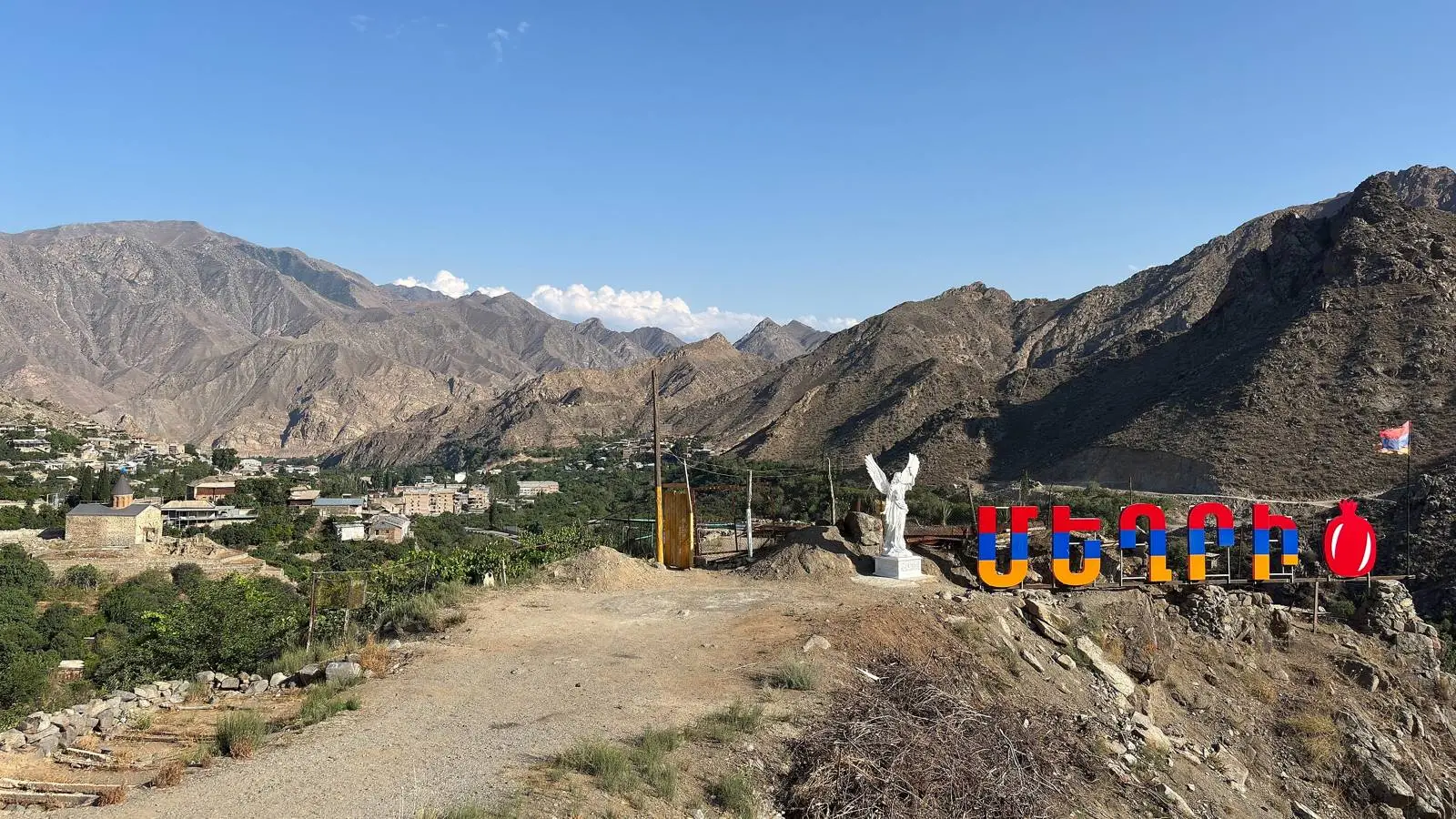
Explore Megri, Armenia’s southernmost city on the Iranian border: a warm-climate haven of orchards, beekeeping and aromatic honey, local life, untapped charm.
At Armenia’s far south, right on the border with Iran, lies a small yet captivating city: Megri. Its name is as sweet as dessert—translated from Armenian, it means “honey.” It might sound like a poetic flourish, but the word suits the place remarkably well.
Megri is Armenia’s southernmost city. It sits in the Arax River valley at the foot of the mountains, not far from the Iranian border. The climate here contrasts with much of the country: while other regions turn cold and snowy, Megri enjoys mild winters and a long, warm summer.
Thanks to this, the area grows fruits that don’t thrive elsewhere in Armenia: pomegranates, figs, persimmons, kiwifruit, olives. Flowering orchards and an abundance of blossoms make ideal conditions for bees—one more reason the city’s “honeyed” name feels earned.
The region is known for its beekeepers. Bees draw nectar from a mosaic of fruit trees, and the local honey comes out especially aromatic. Precise production figures are hard to find, yet beekeeping clearly holds a firm place in local life.
The state backs the sector as well: across Armenia, farmers can receive up to half the cost of new bees and hives. That support helps the craft develop nationwide, including in Megri.
Still, not everything goes smoothly. In autumn 2025, local beekeepers said their bees began behaving oddly—flying less and making less honey. Specialists suggested a disease might be to blame, but so far there is no definitive explanation.
Megri is often called the country’s southern gate. It really is the farthest point south, with Iran within easy reach. That location gives the city a distinctive character, as if it quietly links Armenian and Middle Eastern influences.
Nature feels different here, and the city’s look reflects that. Even in winter, greenery lingers; in summer, the vegetation takes over.
Beyond the region, few have heard of Megri. Tourists rarely make it this far, which is a shame: the city moves at its own gentle pace, keeps its traditions, and grows fruits—and honey—that stand apart.
This isn’t an invitation so much as a simple observation. The warmth here is real, in the climate and in people’s attitudes. And the “honey” in the name isn’t just a pretty label; it mirrors everyday life.