
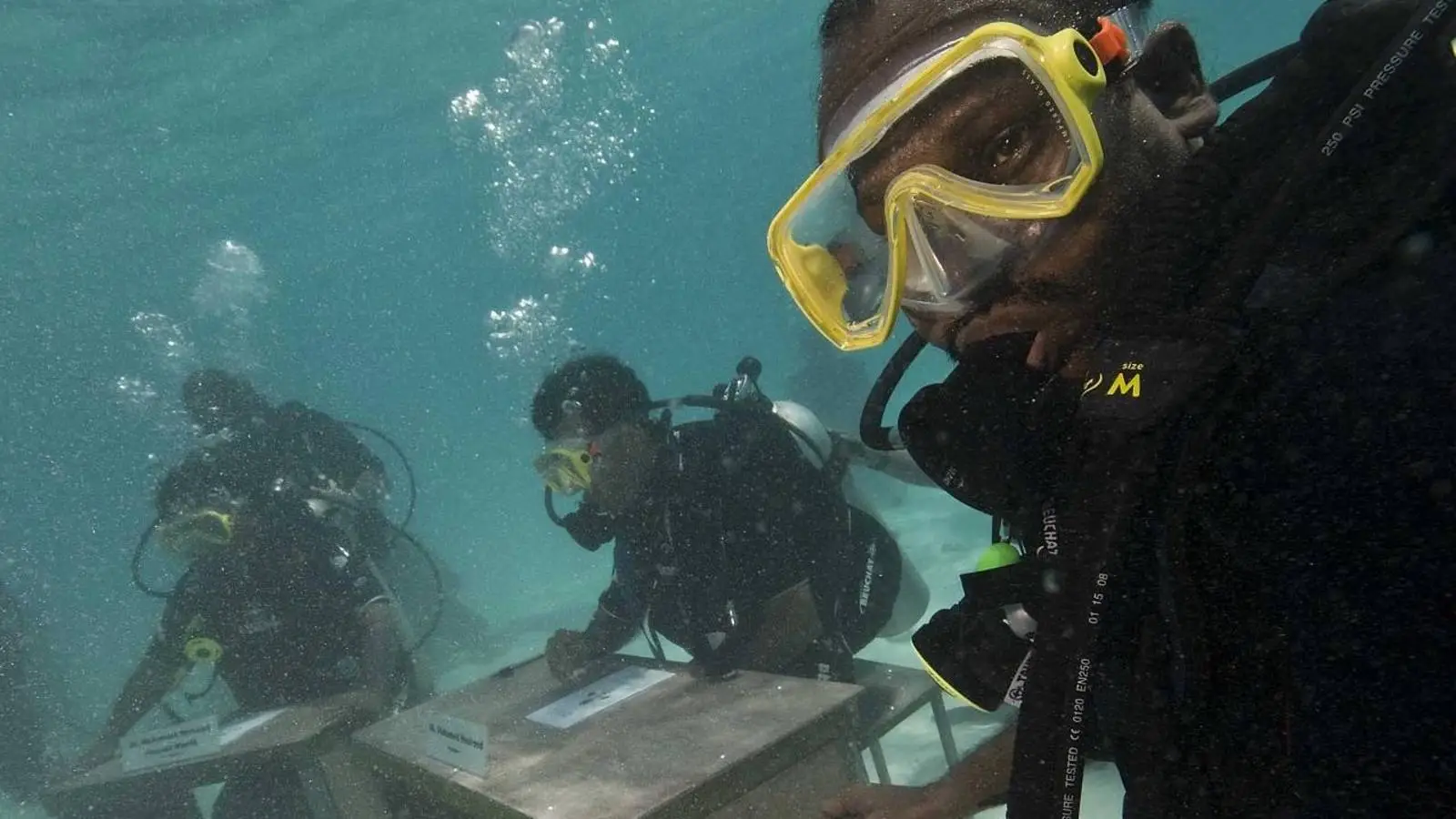
Why Maldives ministers met underwater in 2009: the cabinet's SOS on climate change and sea level rise that still resonates and asks if the world will listen.
In 2009, the government of the Maldives did something no one had tried before: ministers pulled on scuba gear and held an official meeting underwater. It looked theatrical, but it was really a cry for help. The small island nation was trying to tell the world that if the sea keeps rising, the Maldives could simply vanish from the map.
The idea came from then president Mohamed Nasheed. He and his ministers descended to the bottom of a lagoon near the island of Girifushi. Everyone took a brief diving lesson beforehand to make sure the spectacle didn’t become a real emergency.
Underwater, using hand signals and writing boards, the ministers signed an appeal to the world with a concise, pointed message—essentially an SOS from the front lines of climate change.
In doing so, they underlined how serious global warming has become for countries like the Maldives.
The Maldives are more than a thousand islands in the Indian Ocean. Almost all are flat, coral in origin. The average elevation is just over a meter above sea level. Which means that if the ocean rises significantly, water could flood the entire country.
People there already live with eroding shores, stronger storms, and islands that are shrinking. If things keep going the same way, a whole country could disappear.
It may sound like pure PR, yet there was a clear purpose. The Maldives wanted to focus global attention on a climate threat—and they succeeded. Images of ministers underwater circled the world. Sometimes pictures travel farther than policy papers, and here the symbolism cut through the noise.
The core message was taken to a United Nations climate conference. The Maldivian president said the aim was not to become the first country to disappear, but the first to save itself.
More than a decade has passed since then. The government hasn’t staged similarly eye‑catching actions—at least, there have been no fresh mentions in official sources over the past year. Yet that underwater meeting is still remembered: it shows up in classrooms, on environmental websites, and as an example of how to talk about serious issues in an unusual way.
Today the Maldives are looking for ways to stay safe: building protective walls, talking with other countries, and developing environmental projects. The main point hasn’t changed—if nothing is done, there may be no time left.
That underwater meeting became a symbol: simple, clear, and striking. It showed that even a small country can speak loudly about a big problem. The question is whether the world is ready to listen.