
Discover why Santorini’s white houses with blue roofs became iconic—from 1938 lime whitewash and disease control to heat reflection, cave homes, and tradition.
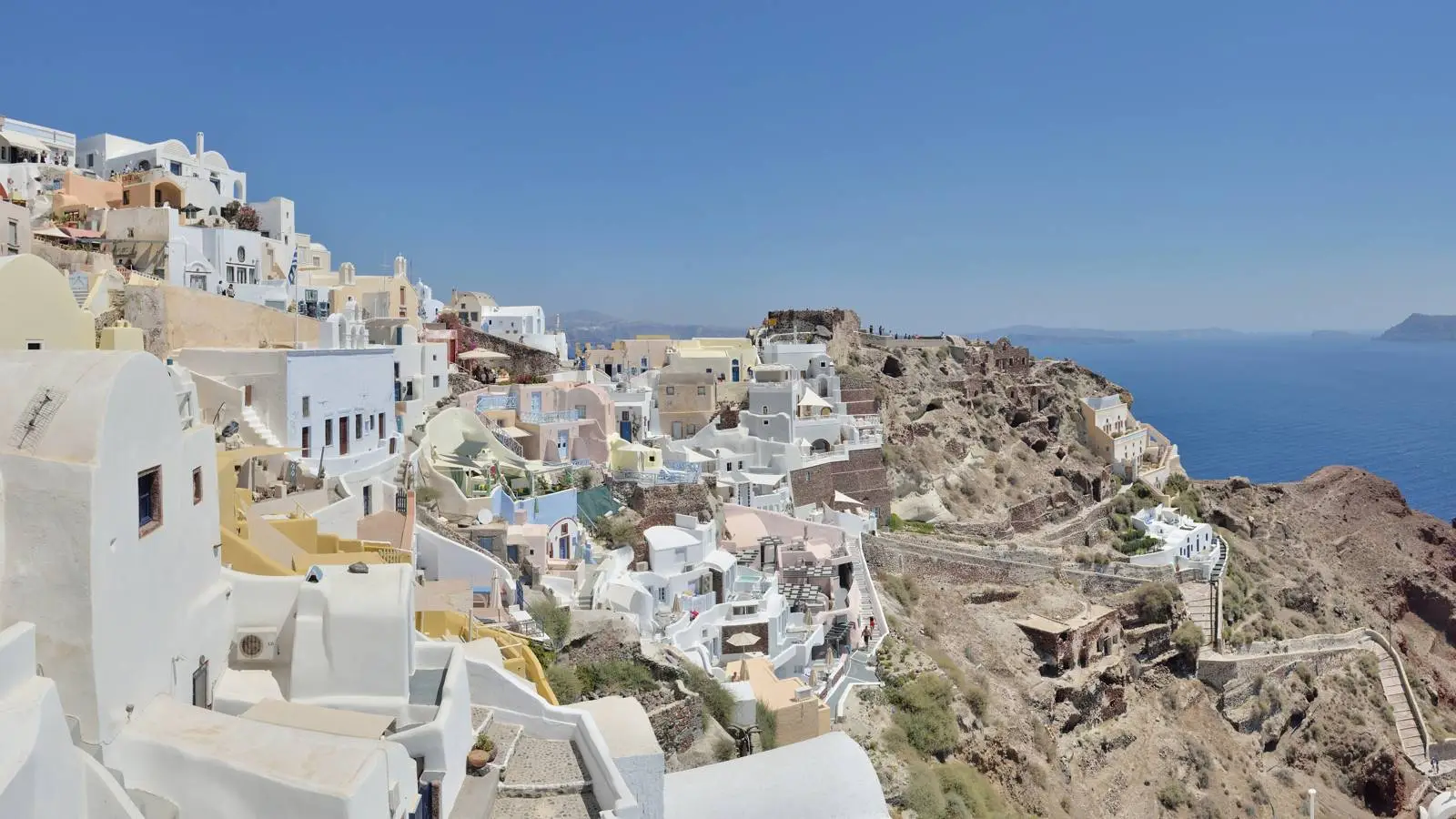
On the Greek island of Santorini, white houses with blue rooftops stand out against the sea and sky. The scenes look almost unreal. Yet the beauty has a very practical backstory: the island’s white palette didn’t appear by chance, and it’s about more than fashion or tradition.
In 1938, Greece faced a cholera outbreak. To fight the disease, authorities took an unusual step: all houses on the islands, Santorini included, had to be whitewashed with lime. The mixture was regarded as a good disinfectant. It killed microbes and was inexpensive, so even the poorest residents could use it.
Over time, the emergency measure turned into a habit—and then into a tradition.
Santorini is a very hot island. In summer, the sun blazes from morning to evening, and buildings absorb the heat. White paint reflects sunlight, so interiors stay noticeably cooler. That matters especially where there’s no air conditioning or where electricity is costly.
Many homes on Santorini are also carved directly into the rock—an old construction method that preserves warmth in winter and coolness in summer. These “cave” houses shield residents from the heat, and the thick stone walls help hold a steady temperature.
The mandatory whitewash began as a hygiene measure but gradually became part of Santorini’s identity. After the strong earthquake of 1956, when many buildings were destroyed, people rebuilt—and most painted their homes white again.
Since then, the image of a white house with a blue roof against the sea has become the island’s calling card. No one is required to keep painting in white anymore, yet most people still do—because it’s customary, and because it looks good. Hard to argue with a choice that fits the place so naturally.
The official Santorini website notes that the island’s architecture is closely connected to its natural setting. White houses are not just attractive; they sit comfortably within the cliffs and volcanic landscapes, creating a harmonious, pleasing view. The simplicity is part of the charm.
On Santorini, white is not a passing trend. It began as protection from disease and proved useful in coping with heat. Over time, it became the island’s familiar, beloved look.
Today the blue-and-white style is both beautiful and practical. It has become part of local culture, the island’s tourist image, and, in a way, a small piece of Greece’s brand. Times have changed, but residents still choose white—because it works, because it’s beautiful, and because it has become part of daily life.