
Discover Meghalaya’s living root bridges—grown by Khasi and Jaintia communities. Learn about the UNESCO bid and how this sustainable craft supports daily life.
In India’s Meghalaya, amid lush hills and fast rivers, there are bridges that weren’t built—they were grown. That’s not a figure of speech: they are shaped from living tree roots. They don’t just look unusual, either. People walk across them every day.
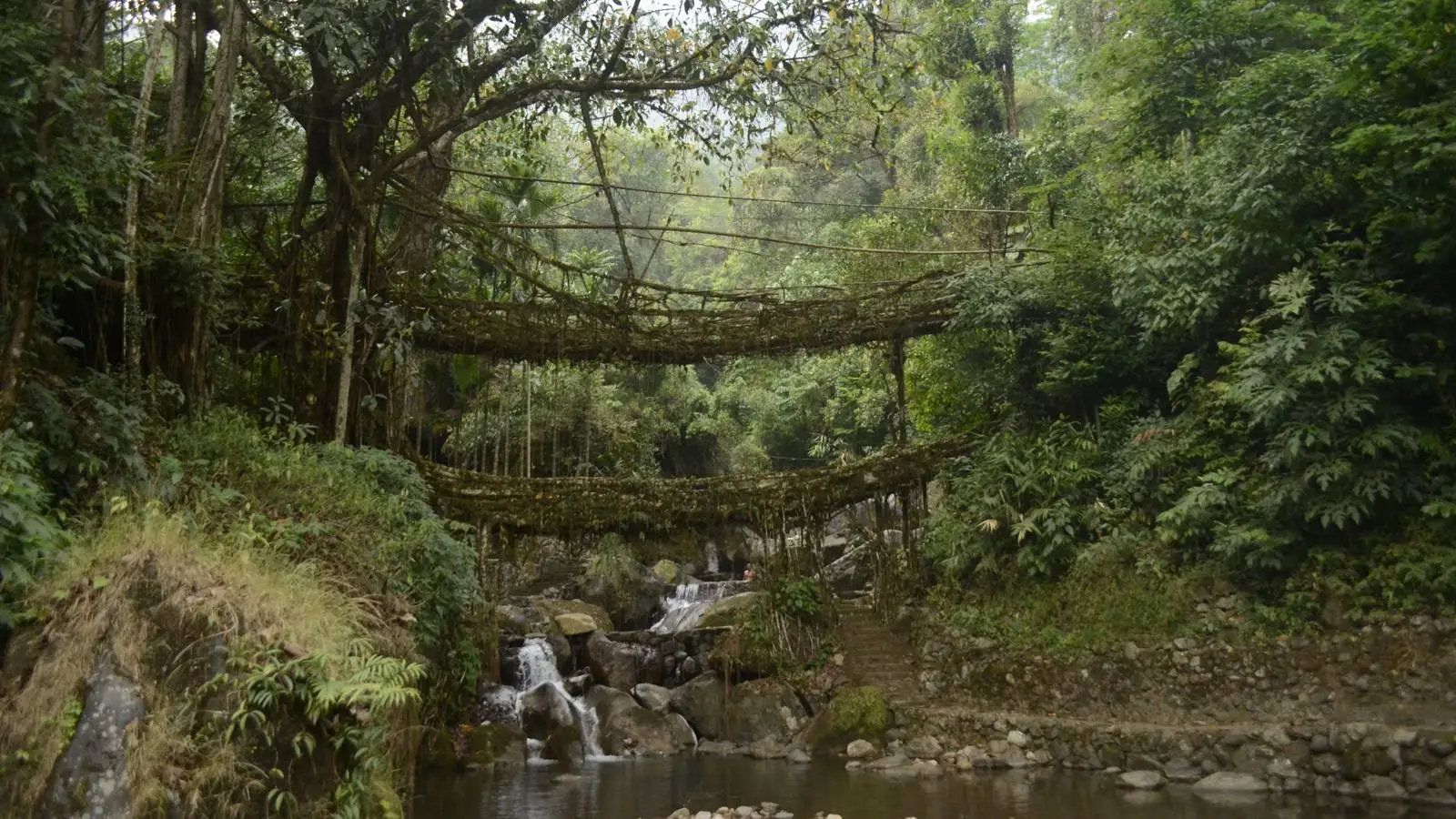
These spans are made from the roots of the rubber fig, a tree that sends down long aerial roots that can be guided where they’re needed. The Khasi and Jaintia communities use bamboo frameworks to direct the roots, usually across a river.
It takes 10, 20, even 30 years before a bridge becomes truly strong. After that, it can serve for centuries, only getting sturdier. The tree keeps living, the roots continue to grow, and the structure gains strength with time.
You’ll find them in remote villages across Meghalaya, especially in the Khasi Hills and Jaintia Hills. The best known is the double-decker bridge in Nongriat, where two spans rise one above the other. More than 130 such bridges are documented, and locals say there are likely more, tucked away in places few people reach.
These bridges weren’t created for tourists. They are everyday infrastructure for local residents, particularly during the monsoon, when rivers overflow and conventional bridges are often washed away.
In 2025, state authorities submitted a bid to add the living bridges to UNESCO’s World Heritage list. That recognition would make them easier to protect. Meghalaya also amended state laws so these sites can be formally recognized as living heritage.
In addition, the state nominated the bridges for a UNESCO international prize for safeguarding cultural traditions. The goal is to underline that they are not a mere rarity, but an essential part of the region’s culture and environment.
Living bridges don’t damage nature. On the contrary, they help keep riverbanks intact and require no cement, metal, or machines. They’re fashioned from what’s already there, with care for the trees and the landscape around them.
The knowledge of how to grow a bridge is passed down from elders to younger generations. There are no blueprints—only experience and close observation. It’s a striking example of working with nature rather than against it.
Yet traditions fade. Young people leave for cities, and seasoned practitioners are disappearing. That’s why it matters to notice these bridges in time, preserve them, and show them to the world. They quietly suggest that patience itself can be a kind of infrastructure.
If UNESCO recognizes the bridges as heritage, it will help safeguard the tradition and attract support. That could spur more active teaching of the craft and a broader interest in it.
Today, as the world searches for more sustainable ways to live, these bridges are more than a curiosity. They show how to build without destroying—and how to live in step with nature.