
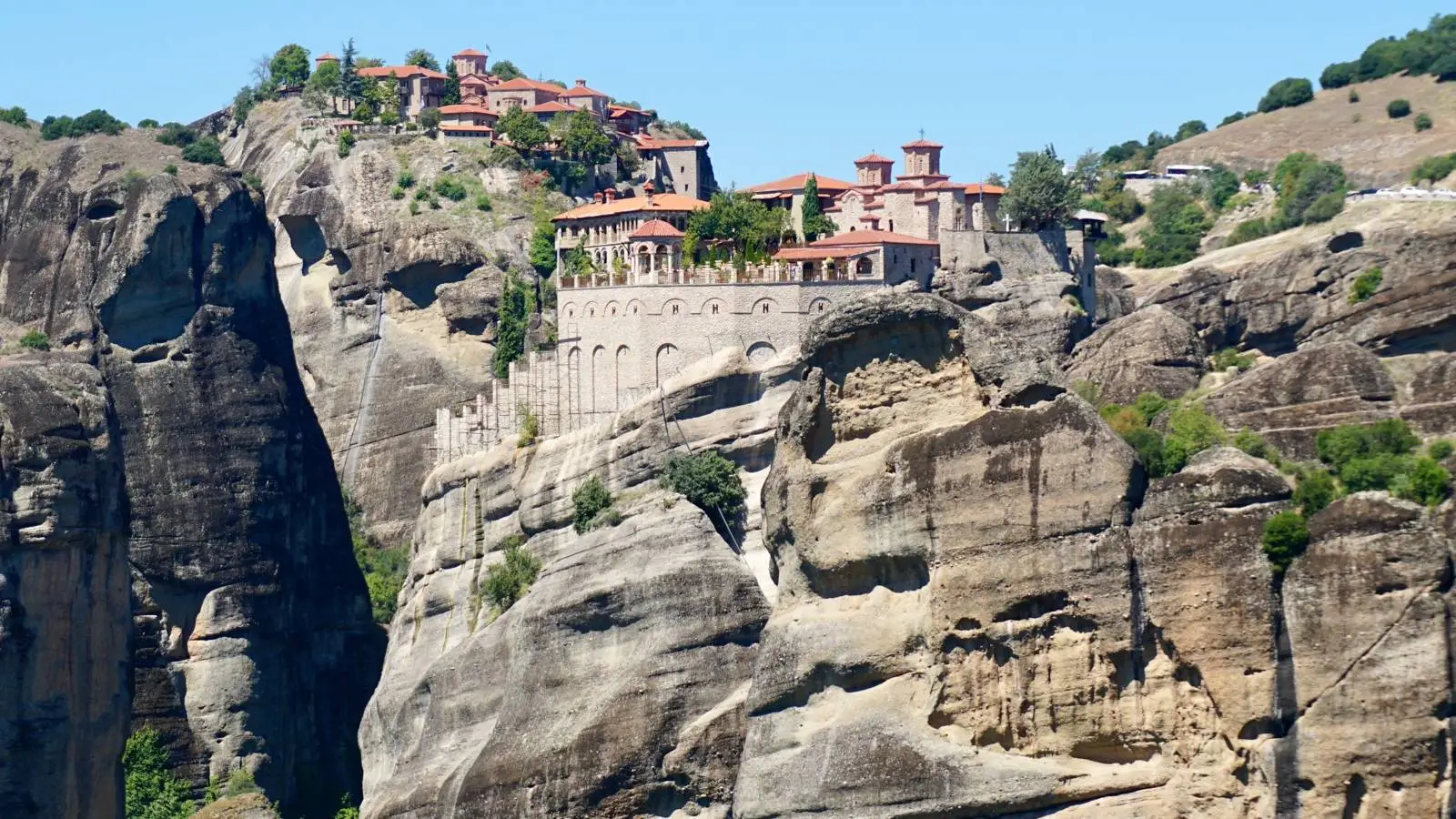
Discover Meteora monasteries in Greece: a UNESCO site of soaring cliffs, from hermits to six active monasteries, with history, dress code and visiting tips.
In central Greece, where mountains step down into green plains, the Meteora monasteries rise on the summits of sheer rock pillars, as if hovering above the earth. Few places in the country feel as singular or as striking, which is why travelers and pilgrims keep returning.
In Greek, the name Meteora translates as suspended in the air. The description fits: cliffs soar up to 400 meters straight from the plain, like stone columns. They are around 60 million years old, formed from ancient river deposits later sculpted by wind and rain.
The complex sits near the town of Kalambaka and the village of Kastraki. It is listed as a UNESCO World Heritage Site, recognized as valuable to people everywhere.
The first to come were hermits in the 11th–12th centuries, seeking silence and solitude for prayer. By the 14th century, proper monasteries began to take shape here. Their number peaked in the 16th century, when 24 monasteries made Meteora a major spiritual center.
Reaching them was once a trial. There were no roads or stairways; monks were hoisted in nets or climbed rope ladders. The ascent was dangerous and demanded resolve that is easy to admire even now.
Today, six monasteries remain active, home to communities of monks and nuns. Each has its own story, church, and frescoes.
The monks and nuns live in seclusion, following long-held spiritual traditions. Their days are structured around prayer, work, and fasting. Despite steady foot traffic, the communities work to preserve quiet and calm — and it shows.
Visitors are asked to follow simple rules: modest clothing is required, with women covering knees and shoulders and men wearing long trousers. Photography is not allowed everywhere. Above all, the place calls for respect.
Meteora is among Greece’s most visited destinations, especially in summer. People come for the landscape, the history, and that rare sense of being somewhere truly out of the ordinary. The hope among locals and monastic communities is that the flow of visitors will not put the monasteries at risk, so the atmosphere can endure.
Ideas are already being discussed to limit visitor numbers on certain days and make visits more organized. The goal is straightforward: protect the silence and keep everyone safe on the rocks.