
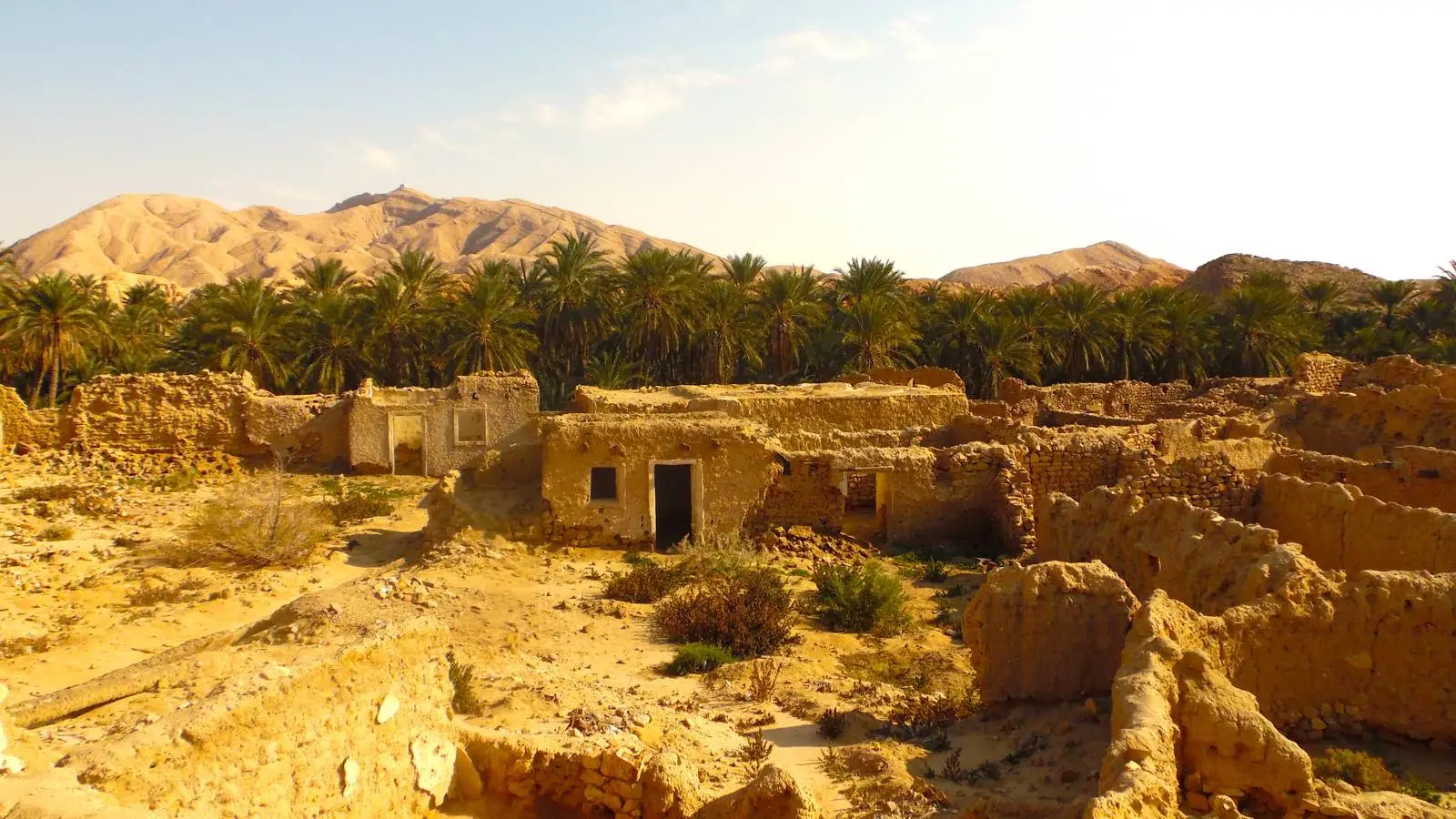
Discover Kaoar in Niger's Tenere Desert: a chain of oases where Bilma and Dirkou thrive on salt and dates, key Saharan stops showing how desert life endures.
In the east of the Tenere Desert, right in the heart of the Sahara, lies an astonishing place—Kaoar. It is neither a city nor a village, but a chain of oases tucked at the base of a sandy plateau. Where endless dunes roll on, greenery suddenly appears—along with water and life.
Kaoar is a long band of green oases in northeastern Niger, close to the borders with Libya and Chad. Here sit small settlements such as Bilma, Dirkou, Aney, and Séguédine. They may look modest next to big cities, yet in this parched region they carry remarkable weight.
The oases exist thanks to the landscape. A high escarpment shields the area from sand, and moisture collects at its foot. Date palms grow here, alongside wells and small gardens. Together, they make life possible where water is the highest value.
Bilma is one of the best-known oases in Kaoar. Salt and natron (a mineral salt used in daily life and medicine) are produced here. Dates are cultivated as well—important both as food and as goods to sell.
In the past, large camel caravans loaded with salt departed from Bilma. Today they are rare, but salt extraction remains a cornerstone of local life.
Dirkou is another important town in this chain of oases. Located further north, it has historically been a stop for those crossing the desert. Now it often sees not only cargo but people moving toward other countries, which makes it a notable point on migration routes.
The oases of Kaoar are not just pretty pockets amid the sand. In such a dry, hot climate, they become lifelines—places to find water, food, and rest. That is why these settlements matter to the country as a whole, both for survival and for the economy.
With climate changing and more people crossing the desert, these places may grow even more significant. Attention is likely to focus on them first—for providing aid and for protecting nature.
Kaoar shows how people can keep going even in the hardest conditions. Dates are still grown, salt is still mined, and traditions are passed down from generation to generation. The oases hold on among the sands, a reminder that even in the heart of the desert, life endures.