
We trace the rumor of an underground shadow theater in Tehran, explore the art’s history in Iran, Mobarak festival, and why the warehouse legend persists.
Sometimes the most intriguing stories are the ones that never quite check out. In Tehran, a noisy, many-layered city, a rumor lingers about a peculiar place: somewhere on the outskirts, people whisper about an abandoned warehouse where a true shadow theater comes alive at night. No posters, no promotion—just light, hands, and silhouettes. We set out to see what holds up—and here’s what we found.
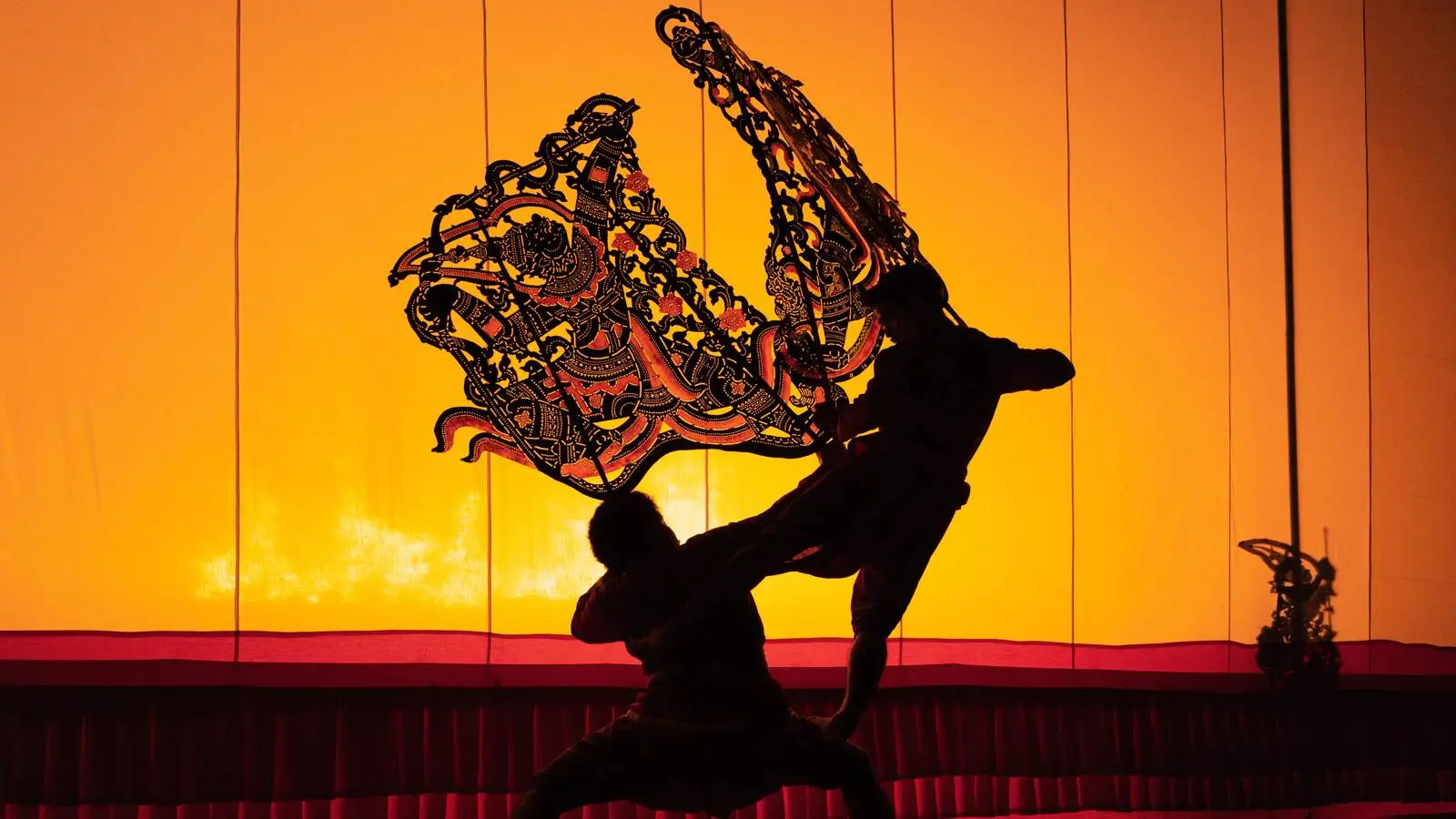
Shadow theater is an ancient art form where characters appear not as actors but as silhouettes cast on a screen. In Iran, such performances were popular centuries ago. People gathered to watch tales and legends flicker to life in the glow of a lamp. The setup was spare: a white cloth, figures cut from leather or paper, and a storyteller guiding the scene.
Over time, the tradition began to fade. It suffered especially as religious influence grew stronger in the country. Gradually, shadow theater stopped being seen as respectable entertainment and all but disappeared.
Today, there is almost no trace of true shadow theater in Iran. Scholars say the genre no longer exists in the country. What remains is memory.
There is, however, a thread that survives in a different form: the Tehran-Mobarak International Puppet Theater Festival. There, performances sometimes echo shadow play, but they are contemporary productions with puppets and other effects. The classic art—built solely on light and shadow—doesn’t take the stage there.
Tehran does have an underground—independent theaters that operate without permits. It is a genuine cultural undercurrent. Performances unfold in apartments, workshops, even basements. You don’t just walk in; you come by personal invitation.
These venues take on sharp subjects—from women’s rights to emigration. Sometimes it’s drama, sometimes dance, sometimes a musical evening. But shadow theater among them is rare. At the very least, we couldn’t find a single article, listing, or photograph to confirm that an underground shadow theater currently exists in Tehran. No warehouse, no shows—nothing.
The tale of a shadow theater in a warehouse is easy to love. It promises secrecy, style, a hint of magic. For now, though, it remains an urban legend. In reality, shadow theater in Iran belongs to history rather than daily life.
Perhaps one day someone will breathe new life into the form. Perhaps a white screen will be stretched again, the lamp lit, and silhouettes will return. For now, that moment hasn’t arrived.