
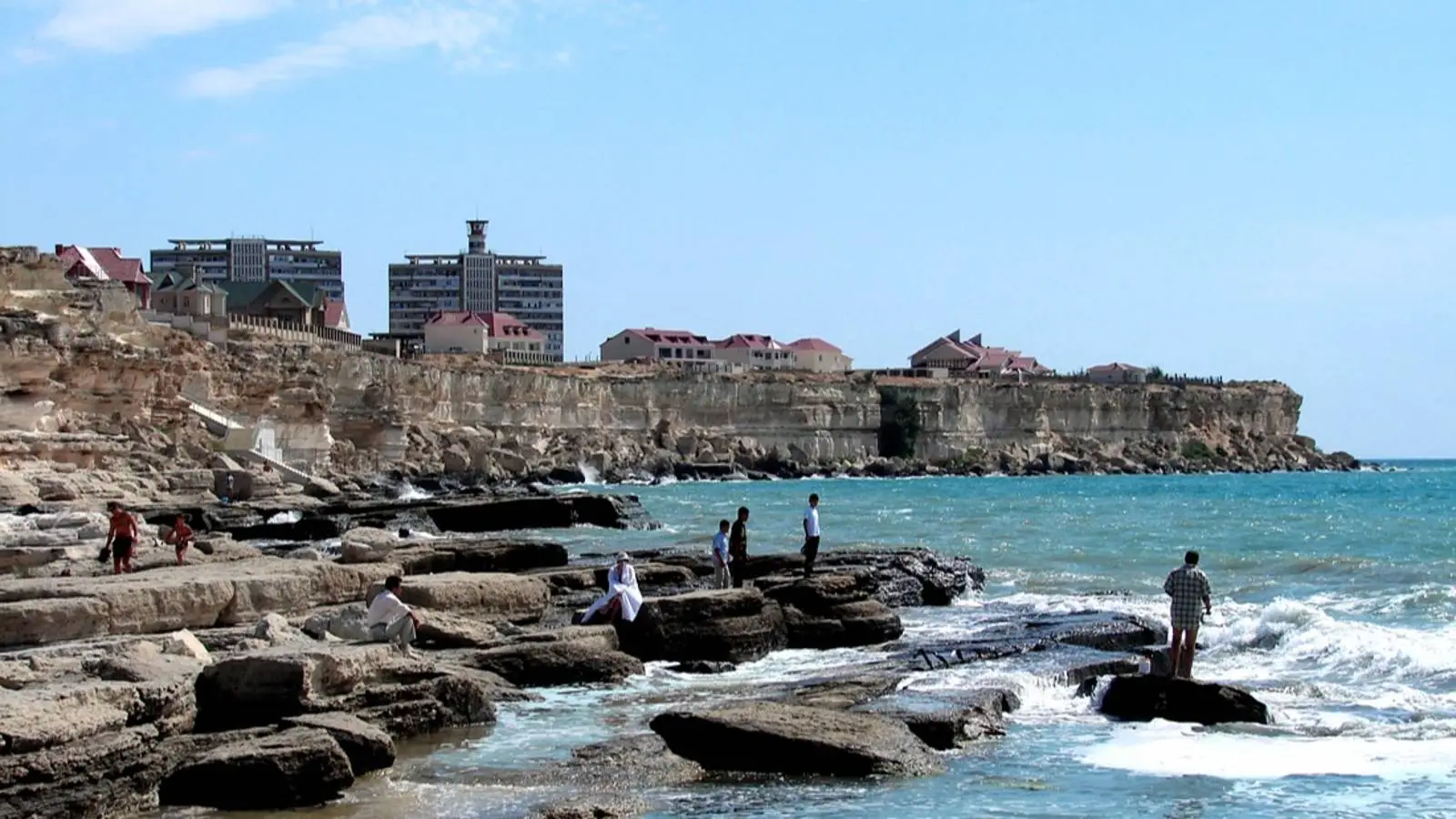
Discover Aktau’s working rooftop lighthouse in Kazakhstan: a real beacon atop an apartment block, guiding ships on the Caspian and shining as a city symbol.
If you picture lighthouses clinging to cliffs or standing right at the water’s edge, Aktau will challenge that image. In this city on Kazakhstan’s Caspian coast, a real lighthouse was installed on the roof of an ordinary apartment block—people live below, and the beacon works above.
In Aktau’s 4th microdistrict, on building No. 9, a functioning lighthouse has stood since 1974. It operates, casts its beam across the sea, and helps ships find their way. The lighthouse itself is a 10-meter tower built directly on the roof. Together with the building, it reaches 73 meters above sea level—high enough for the light to carry far.
The white light can be seen up to 38 kilometers away, the red up to 29. This is a real aid to navigation, not a monument or a bit of décor.
The idea might sound odd at first, but in the 1970s it made perfect sense. The city was growing fast, the terrain around it was flat, and a lighthouse was needed urgently—Aktau was an important port. Building a standalone tower would take longer and cost more than using a ready-made structure. So the solution was simple: put the beacon on the roof of a new residential block. It proved its worth.
Back then, the city was called Shevchenko—named after Ukrainian poet Taras Shevchenko, who once served exile in these parts. Aktau was expanding at pace, and unconventional solutions were part of everyday planning.
Over time, ships turned to GPS and other modern technologies, and the lighthouse lost its importance. It was switched off. The tower stayed on the roof, but its light went dark.
Recently, it was brought back to life ahead of the tourist season. The lamp was replaced, and protections were added against dust, rust, and impacts. Now each evening the beam returns above the rooftops—a nod to the past and a quiet sign that the city values its history.
Lighthouses on residential buildings are almost unheard of worldwide, which is why Aktau’s beacon has become a bona fide urban legend. It’s not a museum piece and not a stage prop—it’s a working installation. Meanwhile, the building itself is typical: stairwells, balconies, residents going about their day.
Access to the lighthouse is closed—it’s a secured facility. But you can spot it from many corners of the city: from the promenade and the neighboring courtyards. It has grown into a symbol of Aktau, a kind of talisman that makes the city instantly recognizable.
A lighthouse on a roof is more than a curiosity. It shows how urban space can be used with a touch of imagination. It’s a story of practicality, ingenuity, and respect for local roots.
And while ships may not need it as much as they once did, it remains a meaningful marker—not so much at sea as in memory. In it, there’s a piece of Aktau’s character, the part that keeps surprising without trying too hard.