
Discover the world’s only country with fewer than 1,000 residents—the Vatican. Learn why this tiny city-state stands alone, with 2024-2025 facts and context.
On the world map, amid dozens of nations, there is one country so modest in size and population that it almost disappears from view. As unlikely as it sounds, there is a sovereign state on Earth with fewer than a thousand residents. That is a fact, not fantasy.
People often wonder whether there are any others like it, with such a tiny headcount.
Usually, small countries are understood as states with limited territory and a modest population. Even so, most of them have at least several thousand people. Tuvalu, for instance, has around 11,000 residents, and San Marino is home to more than 30,000. By global standards that is not much, but it is well above a thousand.
So if the goal is to find a country with fewer than a thousand inhabitants, the list narrows almost to nothing.
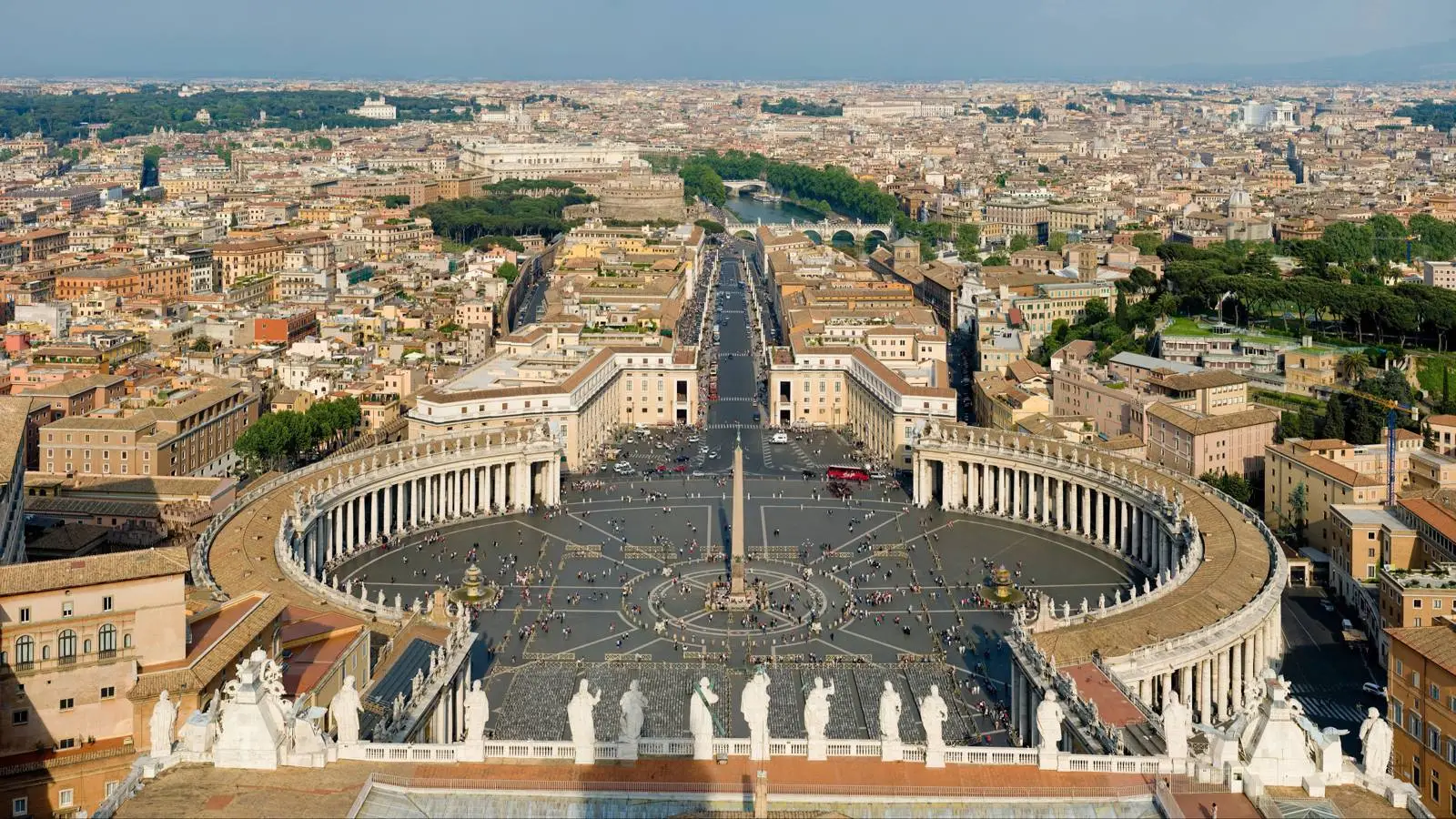
There is only one state that truly fits this criterion: the Vatican. It sits right in the heart of Rome, Italy’s capital, and functions as an independent city‑state.
The Vatican covers roughly half a square kilometer and has a population of about 800. These figures were published in 2024–2025.
Its residents are primarily clergy, guards—including the Swiss Guard—and staff. Ordinary families with children are extremely rare. Citizenship is granted only to those who work for the state and remains valid solely for the duration of their service.
That is why the population stays small. People come and go, and there is no steady natural increase as in typical countries.
It may seem surprising, but no—there are no other countries with fewer than a thousand residents. In recent listings for 2024–2025, not a single other independent state meets that benchmark.
Online rankings of the smallest countries can be misleading. They often mix in places that are not sovereign states at all—such as islands belonging to other countries—or disputed territories. Sometimes the data cited is outdated or presented without a clear year.
There are many reasons. For a place to be considered a country, it needs a functioning government, recognition by other states, its own legal framework, and the ability to administer its territory. Doing all that with just a few hundred people is extraordinarily difficult.
The Vatican is the exception. It exists thanks to a historical agreement and its unique religious role. Nowhere else have similar conditions come together.
Of course, there are other countries with small populations—around 10, 15, or 20 thousand. Nauru, Palau, and Sao Tome and Principe fall into that category. But they are still far larger than the Vatican and have a settled, permanent population.
As for the question of which countries have fewer than a thousand residents, the answer is brief: only the Vatican. It is a singular state with a particular mission, and in the near future it is unlikely to gain any peers on that scale.
The world may be vast and crowded, yet at its very center there is room for a miniature state—almost storybook in scale.