
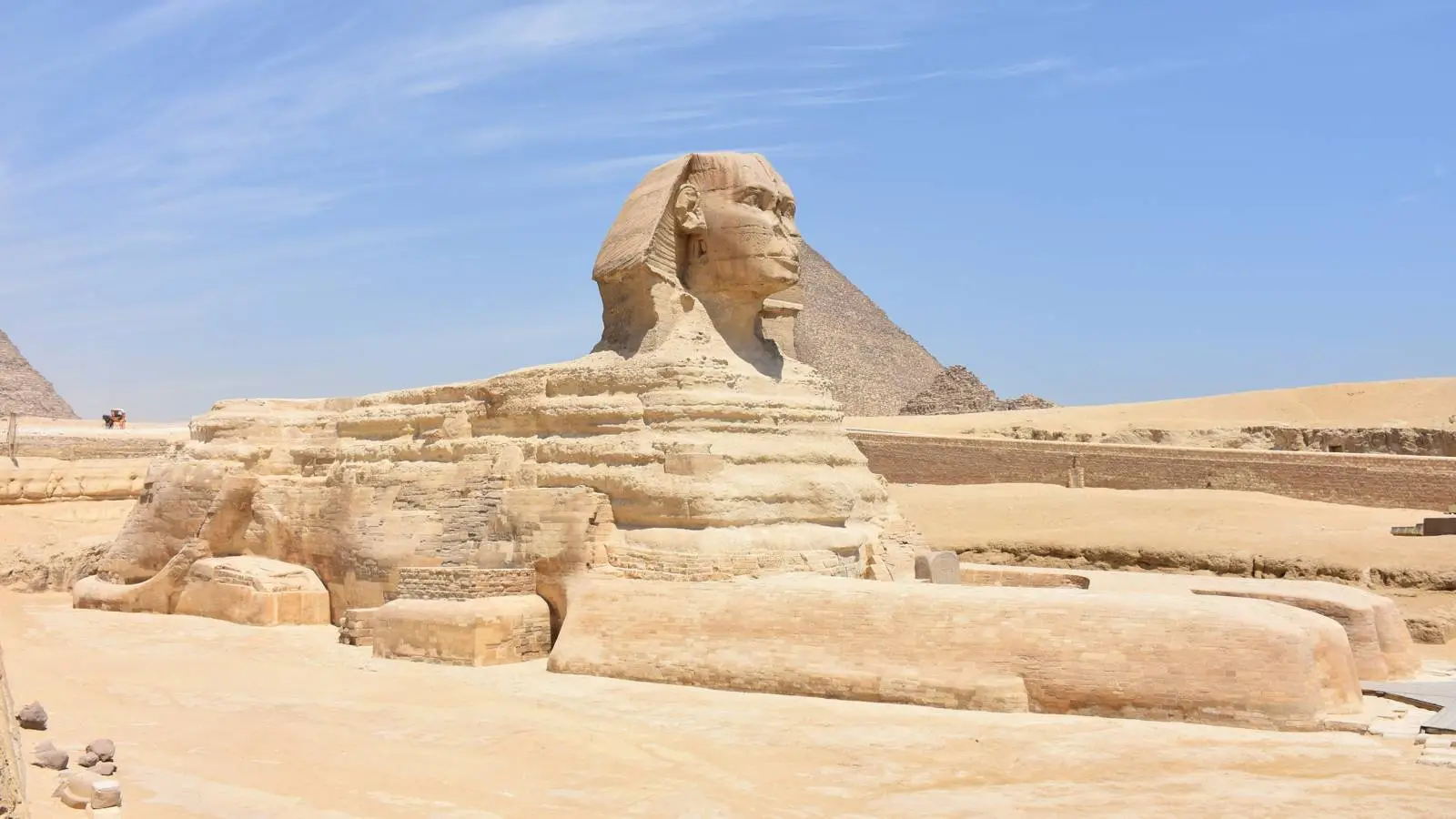
Explore the Great Sphinx of Giza: its origins under Khafre, debated identity, possible hidden chambers and voids, and the mysteries that captivate to this day.
For thousands of years, the Great Sphinx has kept watch over the Giza Plateau, its gaze fixed on the open desert. It remains one of ancient Egypt’s most puzzling monuments, still sparking debate among researchers. Why was it built? Whose face does it bear? And what is it hiding?
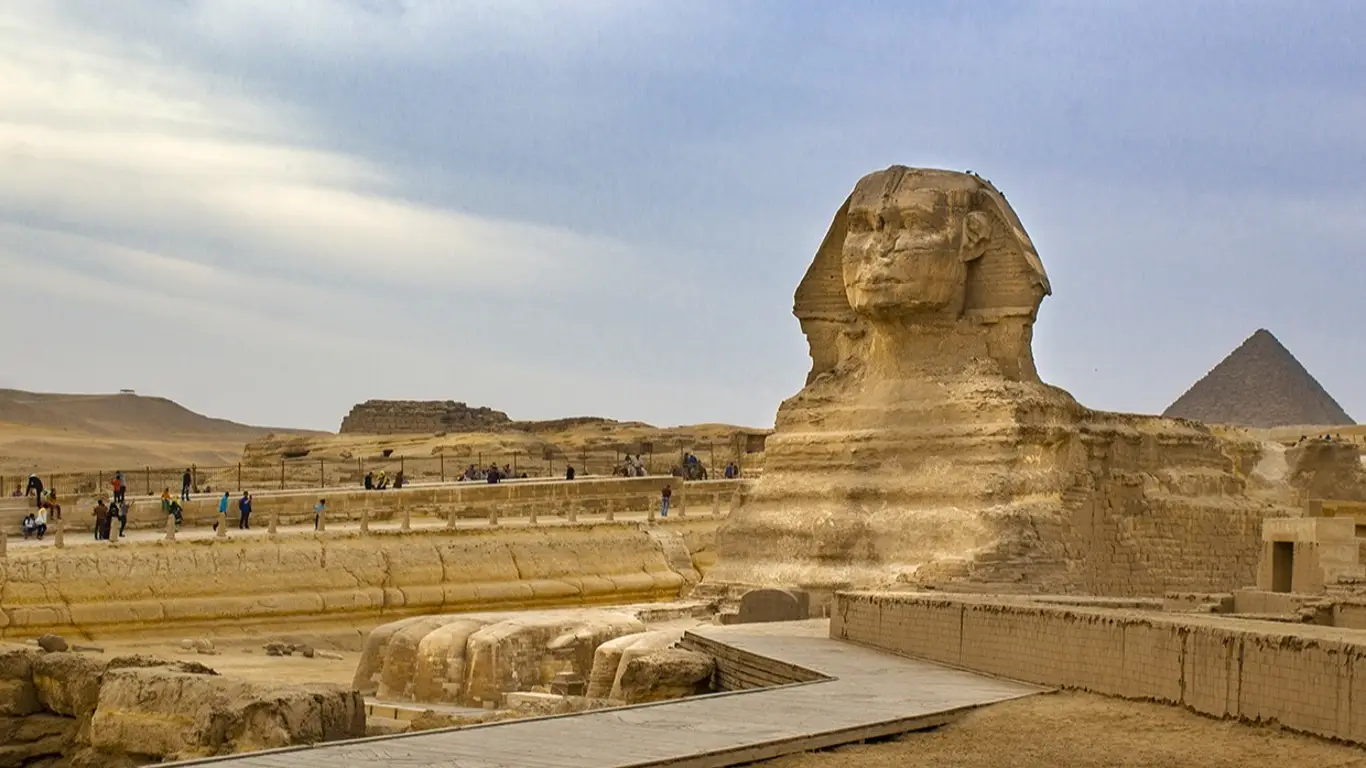
The Sphinx was created roughly 4,500 years ago, during the reign of Pharaoh Khafre. Its scale is striking: about 73 meters long and 20 meters high. Carved from a single mass of stone, it has weathered wind and sand over centuries. The famous nose vanished long ago, and part of the beard is now kept in a museum.
Most scholars believe the face represents Khafre himself, though some argue it may have been altered at a later time.
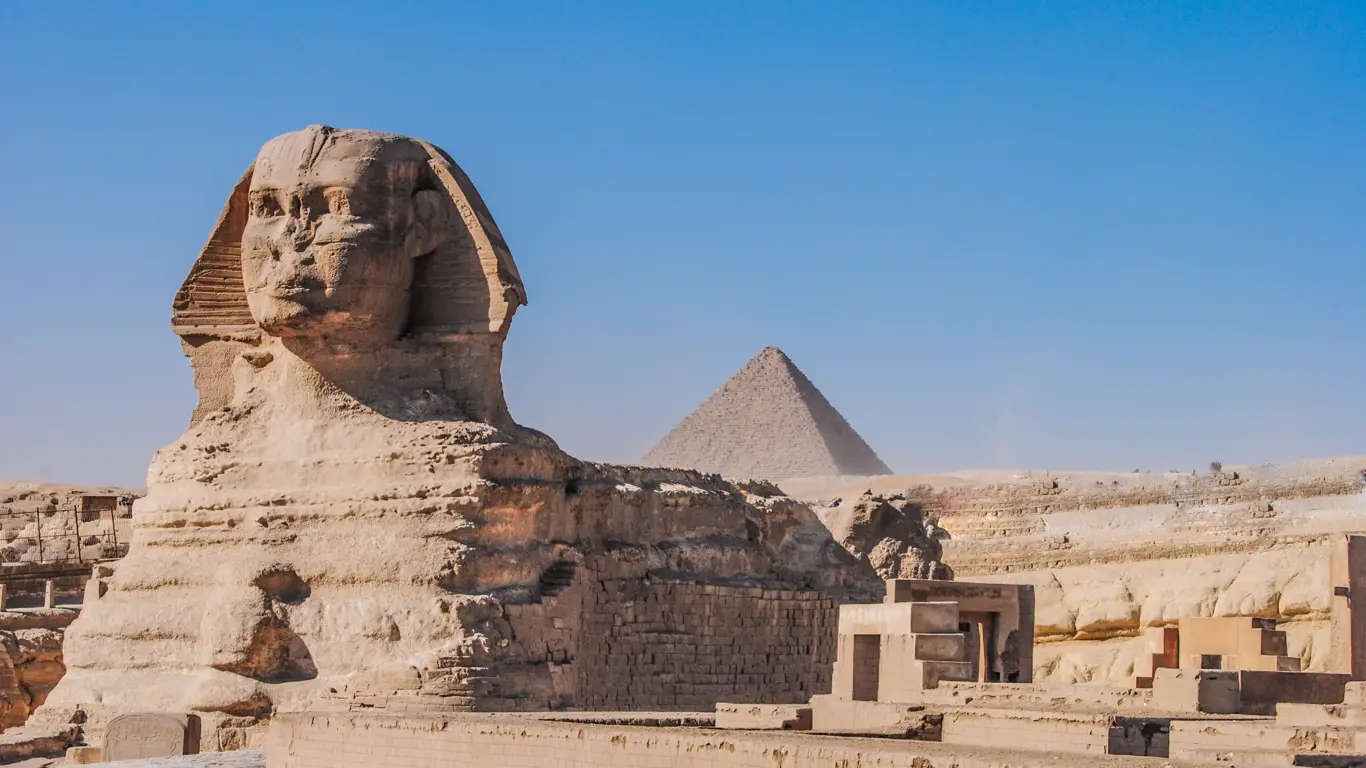
Recent studies indicate there are hidden voids beneath the Sphinx. These may be chambers or passages, but Egyptian authorities have not authorized excavations there, concerned that digging could damage the monument. Given the risks, the caution feels understandable.
Another hypothesis suggests the Sphinx may have started as a natural rock outcrop that was later adopted as a base and shaped into the statue we see today.
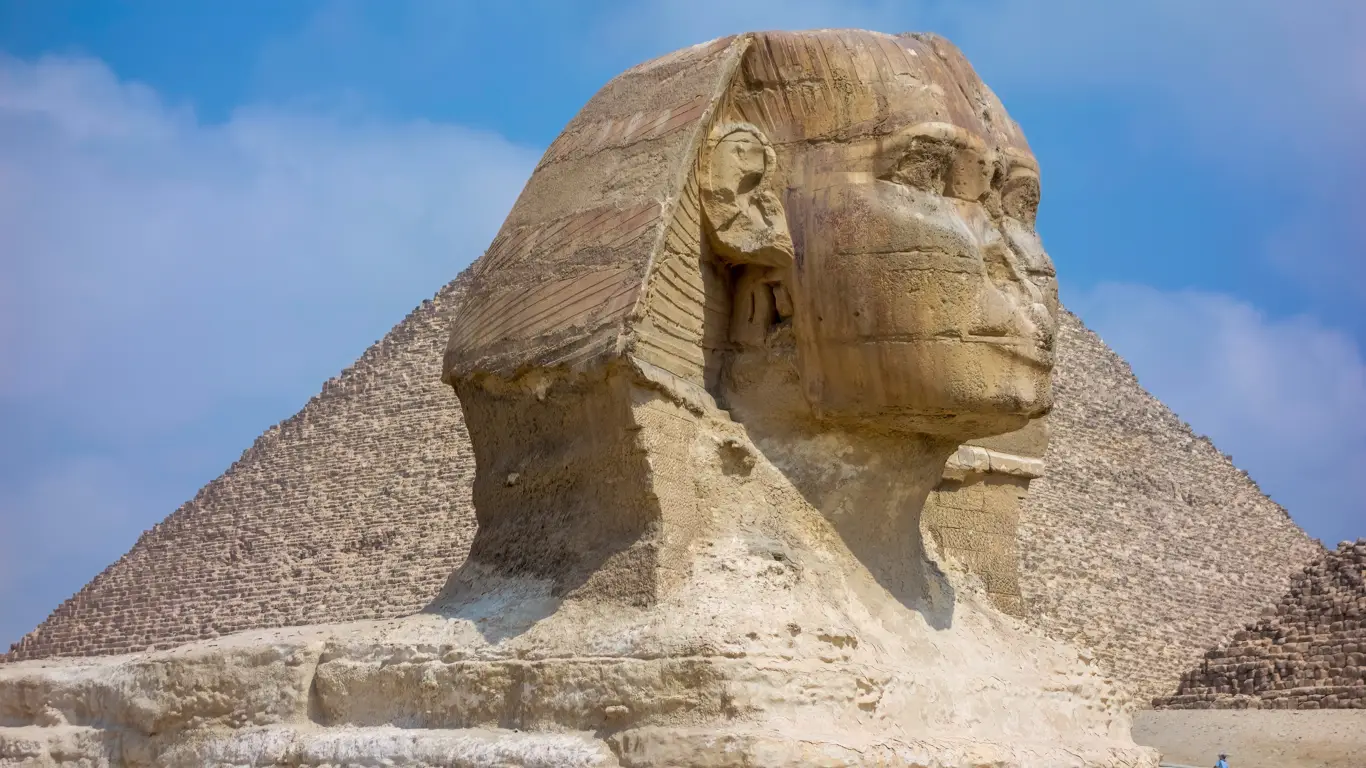
There is also a popular idea about a so-called Hall of Records that might lie beneath the Sphinx. Legend holds that ancient manuscripts or artifacts are hidden there, the kind that could illuminate unknown chapters of history. This remains unproven, yet researchers persist in their search.
Even with modern tools, the Sphinx refuses easy answers. Future work may yet lift the veil. Until then, it stands in silence on the edge of the desert, a guardian of the past—and perhaps that enduring mystery is part of its power.