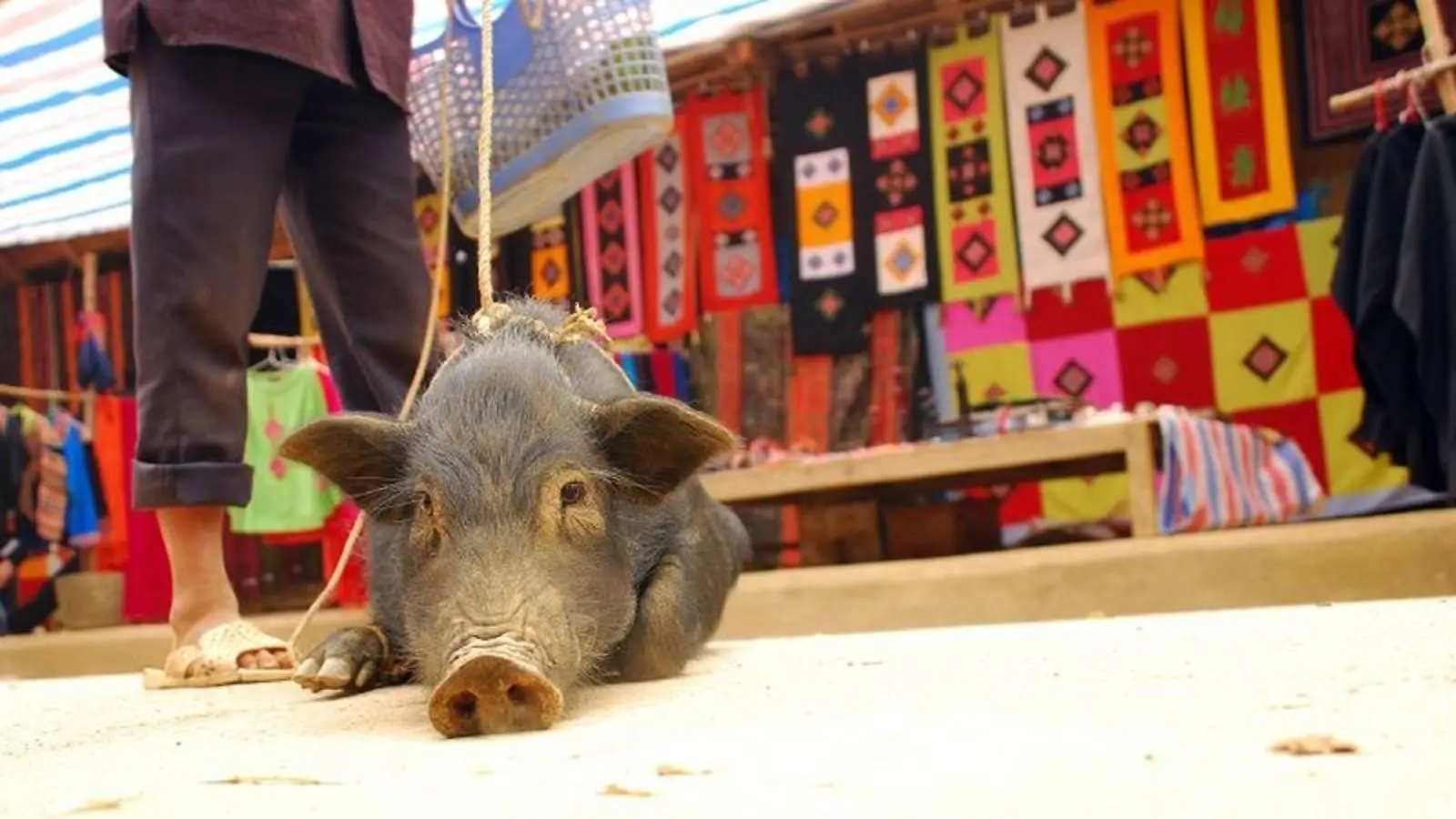
Do Vietnamese families keep pigs as pets? We examine facts, culture, and the pot-bellied pig to debunk the myth and explain how pigs are viewed in Vietnam.
An eye-catching claim keeps surfacing online: in Vietnam, some families supposedly let pigs live not in the sty but right inside the house, treated like genuine pets. Is that really the case?
Vietnam does have its signature mini-pig breed—the Vietnamese pot-bellied pig. It’s small, with a comical belly and bright eyes. This is the very breed that took off in the United States and Europe, where people began keeping them at home much like dogs or cats.
Many saw these pigs on social media and concluded that if the breed is Vietnamese, then people in Vietnam must keep them at home too. It sounds plausible at first glance, but does it hold up?
Looking at solid sources—official websites, news articles, and recent data—none of them say that Vietnamese families widely keep pigs as household pets.
On the contrary, Vietnam is among the countries that consume the most pork. There, pigs are first and foremost food or a source of income, especially in rural areas.
Some sources describe the Lon I breed, focusing on its appearance and temperament. But those discussions mostly refer to other countries, where the breed was imported and then kept at home.
Vietnamese publications and official information primarily present pigs as livestock rather than pets.
Of course, it’s possible that someone in a village grows attached to a piglet and decides not to slaughter it, letting it live in the yard. But that’s the exception, not the rule. In Vietnam’s mainstream culture, the pig remains a symbol of prosperity and a part of the household economy—not a pet snoozing on the sofa.
Most likely, the story spread because Vietnamese mini-pigs became popular abroad. They’re cute, smart, and easy to bond with—so people started keeping them at home. From there, some assumed that simply because the breed is Vietnamese, families in Vietnam must also be keeping them as pets. The trouble is, there’s no evidence to back that up.
Vietnamese culture is rich in symbols, and the pig carries meanings tied to abundance, festivities, and even folk art. But a cultural symbol is not the same as a household pet.
— Pigs in Vietnam do matter—as part of food traditions and the economy.
— The mini-pig breed comes from Vietnam, but it’s more often kept as a pet in other countries than in Vietnam itself.
— There are no official or recent publications indicating that Vietnamese families widely keep pigs as pets.
The charming “fact” is most likely a myth. Yes, the breed is Vietnamese. Yes, it can be a house pet. But in Vietnam itself, pigs are still primarily part of the farm, not the family couch.
It’s striking how one little piglet can fuel so many rumors—and a good reminder to check where reality ends and an internet legend begins.