
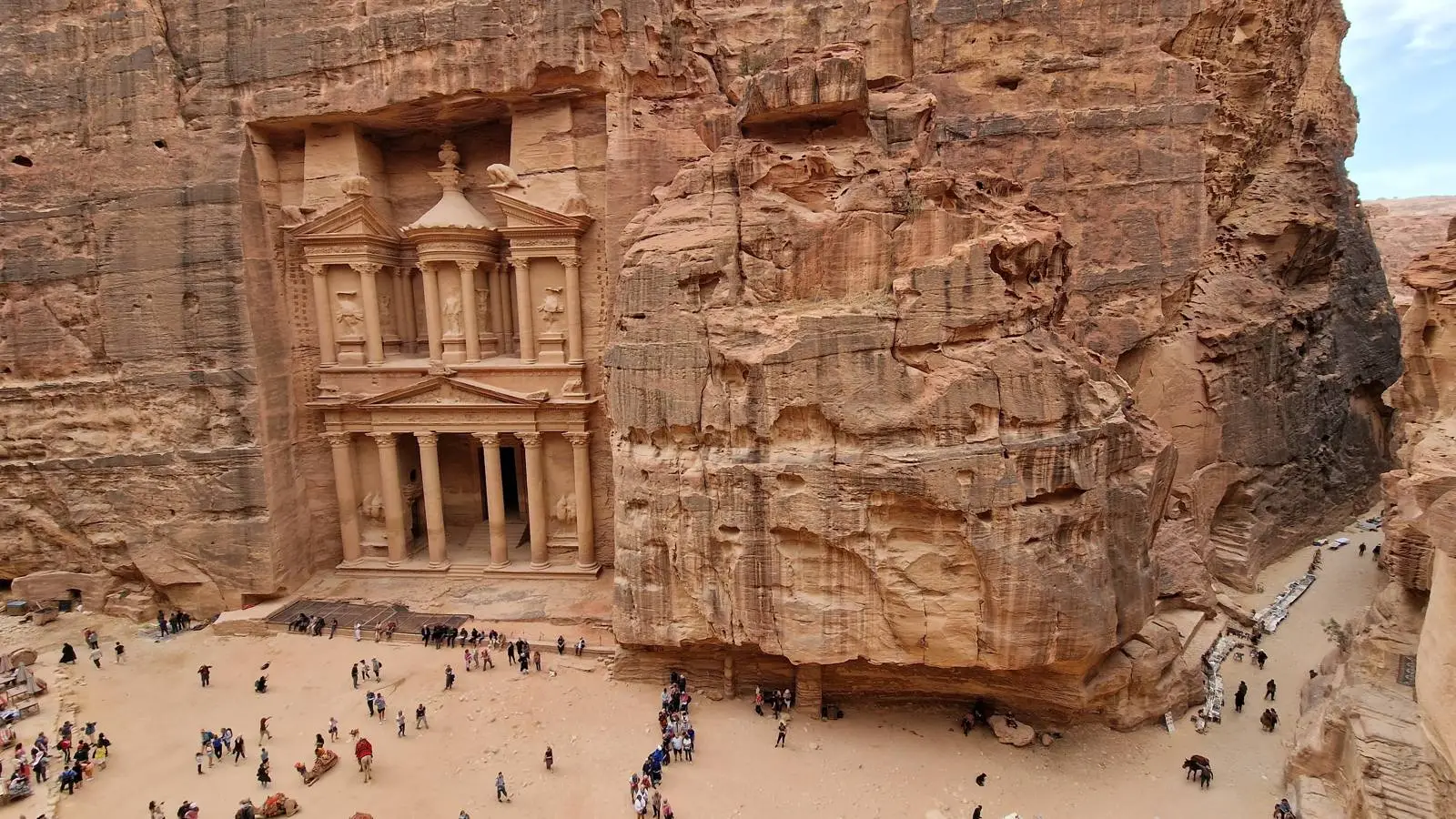
Explore Petra’s Nabataean engineering marvels: the water management system, the 86-meter flood tunnel, and rock-carved monuments like Al-Khazneh and Ad-Deir.
In the heart of the Jordanian desert, hemmed in by relentless cliffs and scorching winds, an entire city lies hidden. Petra is more than an ancient settlement; it is an engineering tour de force carved against the grain of nature. How did the Nabataeans turn a parched, waterless valley into a thriving hub of trade and culture? What techniques let them hew temples straight from the rock and secure water where every sip was priceless?
What survives today is breathtaking in scale. Yet the city’s real wonder is not the facades, but the quiet brilliance of the systems that allowed life to flourish where it had no right to.
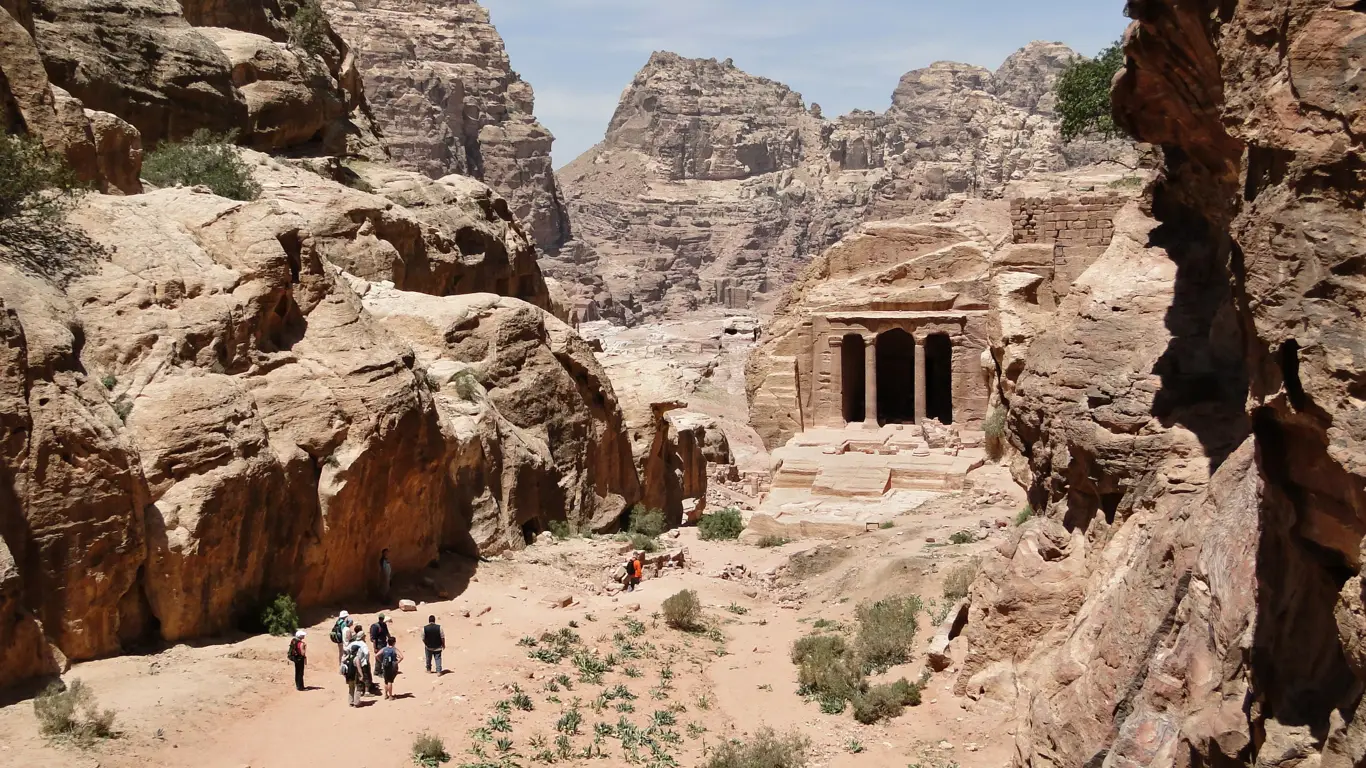
Life depends on water. In the desert that is a stubborn challenge: rain is rare, and when it does arrive, it can come as violent downpours that sweep everything in their path. The Nabataeans met this head-on with an integrated system. Channels and pipes guided rainwater to where it was needed. Reservoirs stored it for dry spells. Filters cleaned it so it could be safely drunk.
The masterstroke was an 86-meter tunnel that diverted a river around the city, shielding Petra from destructive floods.
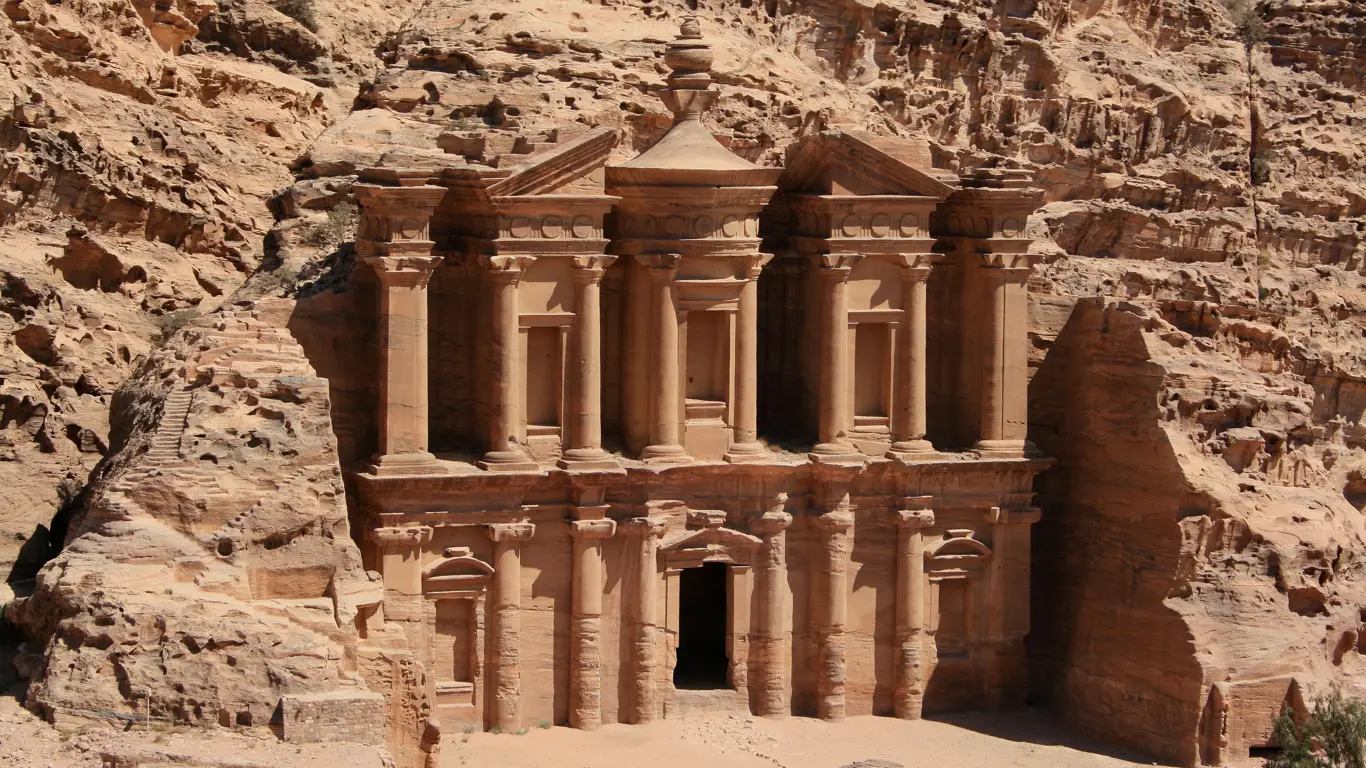
Petra’s famed monuments, including Al-Khazneh, were not built like ordinary houses—they were carved directly into the rock. How was that even done?
Most likely, artisans worked from the top down: they shaped the upper parts first and then moved lower, reducing the risk of collapse. The stone was rough-cut before being refined to a precise finish with chisels.
Archaeologists have also found traces of wooden scaffolding, suggesting builders used it to reach the highest sections of the cliffs.
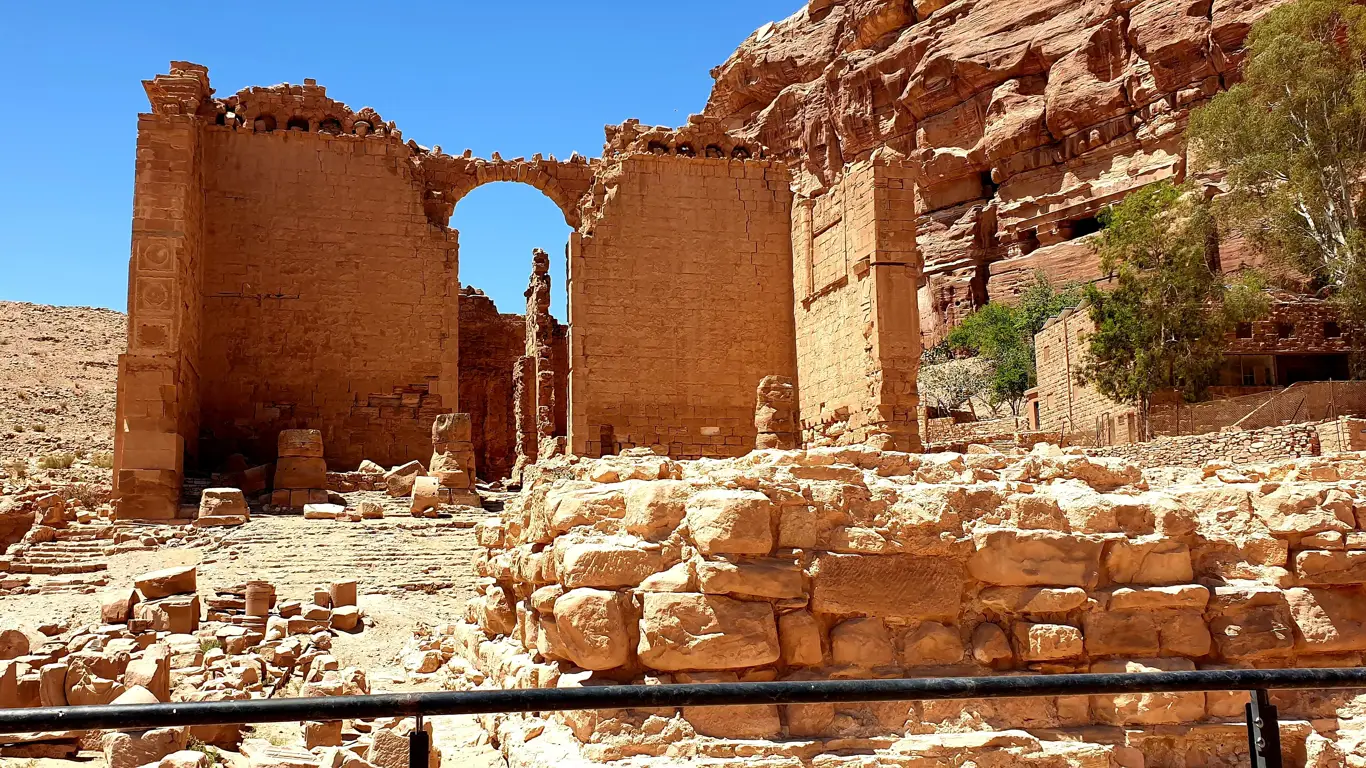
Petra’s best-known monument is Al-Khazneh, the Treasury. Its 40-meter-high facade is carved straight into the cliff, adorned with columns, statues, and reliefs. Its precise purpose remains a mystery.
Other standouts include Ad-Deir (the Monastery), a mountainside temple with a massive facade, and the Royal Tombs—the rock-cut burial places of Nabataean elites.
Today Petra is a UNESCO World Heritage site and one of the New Seven Wonders of the World. Archaeologists continue to study it, uncovering more of the Nabataeans’ technical solutions. Modern tools such as 3D scanning help safeguard these monuments for future generations, a reminder that here, ingenuity was never ornament—it was survival.