
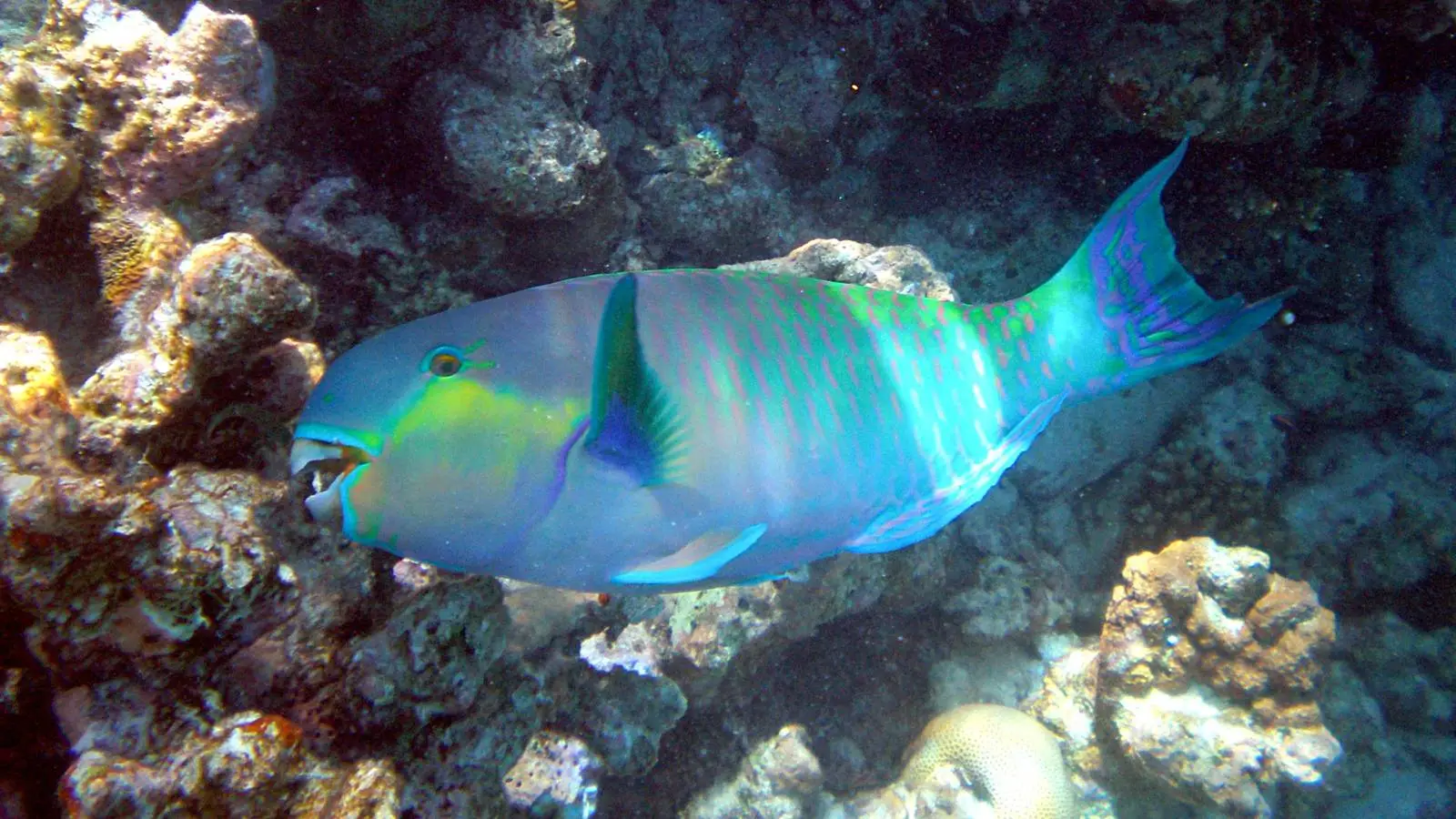
Learn how parrotfish build the Maldives' white sand beaches, keep coral reefs healthy, and fight erosion - why protecting them matters as sea levels rise.
Looking at photos of the Maldives with their turquoise sea, palm trees, and powder-white sand, it’s hard to picture ordinary fish working behind the scenes. Yet that’s exactly what’s happening: many Maldivian beaches exist thanks to parrotfish.
Parrotfish are brightly colored reef dwellers named for their beak-like teeth. With those teeth they scrape algae off coral, and along the way they take in bits of dead coral. They digest what they can, and the rest leaves their bodies as fine white sand.
One parrotfish can produce up to 320 kilograms of sand a year. Put that together and you start to see whole beaches as the handiwork of these small marine builders.
The Maldives aren’t just scenic islands; they’re the world’s lowest country, with an average elevation of about one and a half meters above sea level. Even a modest rise in the ocean could push parts of some islands underwater. Fresh supplies of sand are therefore essential.
Parrotfish don’t just make sand. By clearing algae, they keep corals from getting overgrown and allow reefs to keep developing. That, in turn, supports the marine community around them—from tiny fish to large predators.
In recent years, parrotfish have been caught more often, both deliberately and by accident. That trend harms the underwater environment. Fewer fish mean less sand and weaker reefs.
To counter this, the Maldivian government has banned catching parrotfish, especially around coral areas. The measure helps safeguard both the beaches and the ocean life that depends on healthy reefs.
The Maldives face a particular threat from climate change. Scientists say that if sea levels keep rising, some islands could disappear. All the more reason to protect every quiet ally nature has—even the easily overlooked parrotfish.
Every gram of white sand on a Maldivian beach is the result of these remarkable fish. The next time you see a holiday snapshot from the islands, or stand on those shores yourself, you’ll know who’s behind that postcard beauty.