
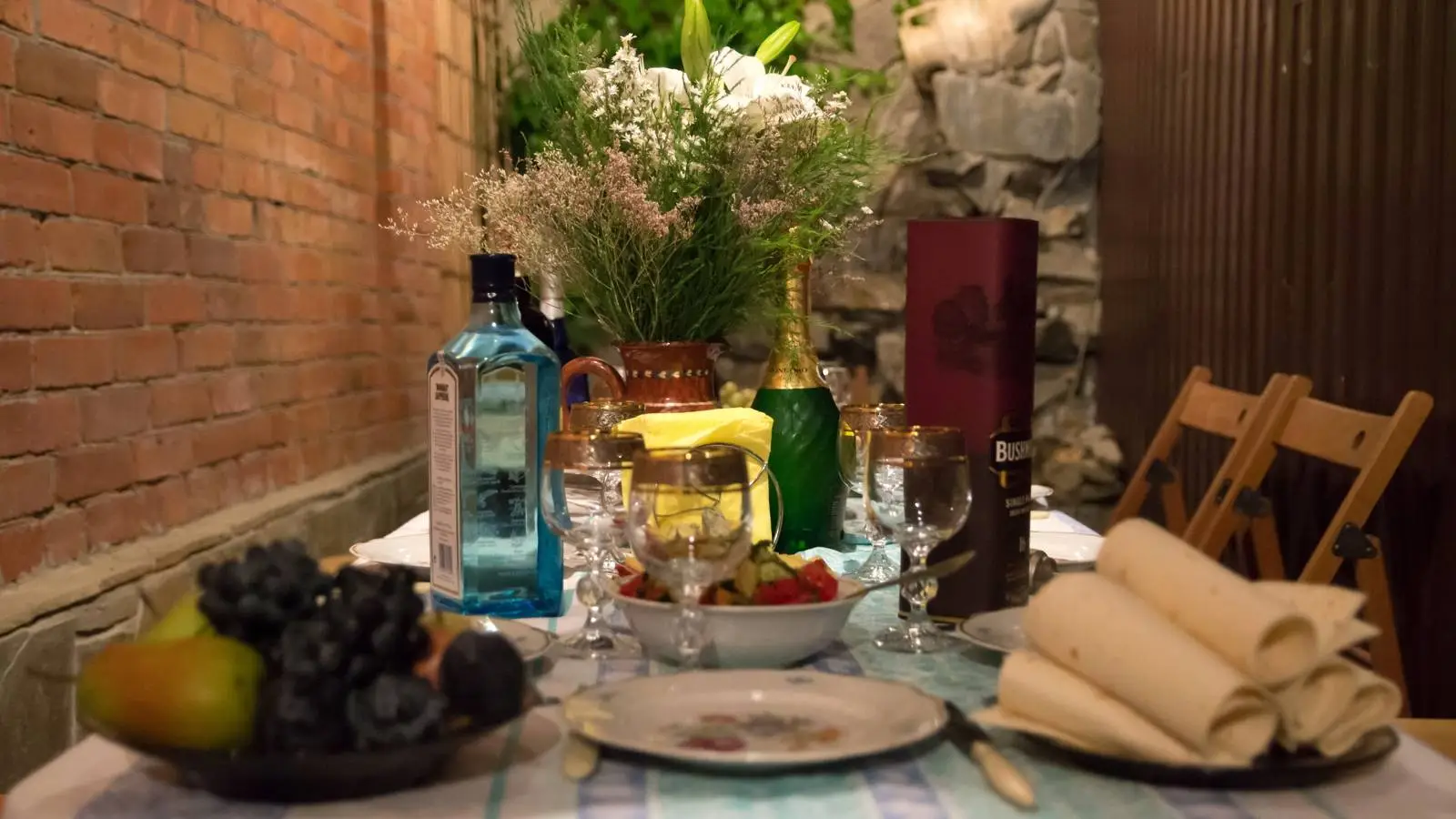
Learn how a Georgian supra works: the role of the tamada, the order of toasts, and how the tradition adapts today—respect, conversation, togetherness, warmth.
In Georgia, a feast is more than food and wine. It is an occasion where every toast carries weight and the evening takes on the rhythm of a ceremony. At the heart of it all is the tamada — not just a toastmaster, but the person who steers the night, sets the mood, and helps guests feel part of something meaningful. Here is how it works and why it still matters.
A supra is the traditional Georgian feast. It can be joyful — for a wedding or a birthday — or solemn, when people honor those who have passed. Either way, it follows a certain order. This is not about grabbing a quick bite; it is about conversation, respect, and a very particular atmosphere.
And there is one rule above all: no one simply raises a glass and drinks. First comes a toast, then the sip.
The tamada leads the table. He gives the first toast, sets the theme for the evening, and makes sure everyone is included in the exchange. A good tamada speaks with grace and purpose, knows when to joke and when to be serious, and, perhaps surprisingly, usually drinks sparingly — staying clear-headed to guide the flow.
Sometimes the tamada is chosen in advance; other times, right at the table. What matters is the ability to keep the conversation alive and to know what to say and in what sequence.
It often starts with a first toast — to God, to parents, or to the homeland. Then come toasts to health, to friends, to love, to the departed, to the future. Each one is a moment in itself, not a formality.
At times the tamada passes the word to another guest. This handover, called alaverdi, lets others speak on the same theme. The evening carries on like this. These gatherings can last, because the toasts are offered not for show, but from the heart — and that is what keeps people listening.
Feasts vary slightly from region to region. Somewhere the first toast honors peace; elsewhere it is dedicated to the sacred. Yet the essence is constant: respect for the spoken word, for tradition, and for the people around the table.
In Tbilisi there is even a monument to the tamada — a man holding a cup aloft. It stands as a tribute to the role and to the tradition itself.
Georgian feasts are very much alive, but not quite as they once were. Younger people increasingly prefer shorter formats — with fewer lengthy toasts and looser rules. Some criticize the tradition as too drawn-out. Tourists, however, are often captivated: for them, such a dinner is a true discovery. More and more gatherings are hosted especially for visitors, with translations, explanations, and adjustments to their cultural background.
Traditions evolve — that is natural. The Georgian feast is not disappearing; it is becoming more flexible and modern, while staying sincere. Even when toasts are shorter, they still return to what matters: people, respect, and a sense of togetherness. Perhaps that ability to adapt is precisely what keeps the ritual vibrant.
A Georgian feast is not about eating your fill. It is about being together, having real conversations, remembering the essential, and saying something from the heart. The tamada is the person who helps turn the evening into something special.
If you ever find yourself at such a table, listen, do not interrupt, and be sure to say something kind. You will be understood — even if you are not Georgian — because the tamada and the toasts are a language spoken with soul.