
Explore Japan’s offbeat wonders: the Yonaguni underwater monument and living vine bridges of Iya Valley, where geology and tradition meet in enigmatic places.
Sumo, sushi, and cherry blossoms have long symbolized Japan. Yet the country also shelters other, no less astonishing places—even if they rarely make the postcards. One lies beneath the sea, another sways above a mountain gorge. Each carries its own enigma, prompting questions that still have no definitive answers.
Yonaguni is a small island at Japan’s far western edge. It sits closer to Taiwan than to Tokyo. Its fame, however, comes from a peculiar stone formation discovered on the seabed just off its shores.
Back in 1986, a diving instructor noticed something under the water that looked like vast steps, platforms, and sharp right angles. Some sections appear as if they had been cut by hand. Ever since, scientists, archaeologists, and the simply curious have argued over what it might be.
One view holds that these are the remains of an ancient structure—perhaps an entire city thousands of years old. If that is true, it could predate the Egyptian pyramids. Supporters say they can make out staircases, walkways, and columns.
Most specialists counter that the formation is entirely natural. In this region, they note, such rock shapes often arise on their own, shaped by the local geology and the movement of the Earth’s crust. Steps and clean angles, they argue, can form without any human hand at all.
There have been no official excavations, and the Japanese government does not recognize the structure as a historical monument. Even so, the allure hasn’t faded. Divers from around the world still come to see a mystery that resists a neat explanation. It’s easy to see why the site keeps fueling speculation.
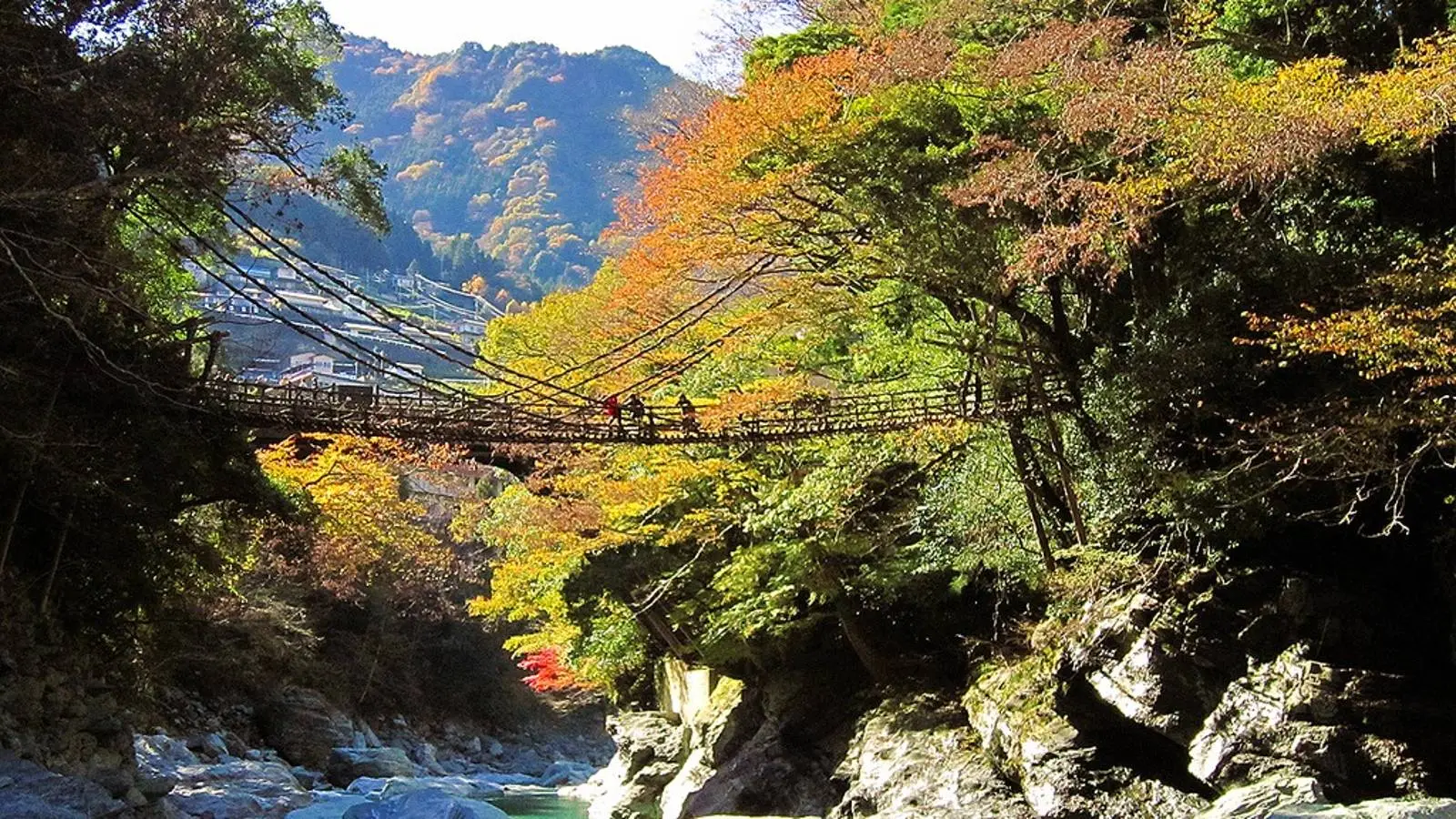
Now to the heart of Shikoku, where the Iya Valley hides in the mountains. It is a secluded landscape of steep slopes, deep gorges, and fast rivers. To cross from one side to the other, people once devised an unusual solution—bridges made from real vines.
The best known is Iya Kazurabashi. It stretches about 45 meters and hangs 14 meters above the river. Built from sturdy wild vines, it weighs around five tons. Local residents once built such bridges so they could retreat quickly from enemies—the vines could be cut if necessary.
Today the bridge is renewed every three years, just as it used to be. People still cross it, gripping the vines and feeling their way over slick wooden planks. The river roars below, the span gently sways—the kind of crossing that imprints itself on memory.
Though it has become a tourist draw, it remains part of local tradition. Other vine bridges survive in the region as well, less famous but no less striking.
The underwater monument off Yonaguni and the vine bridges of Iya seem like entirely separate stories. Yet they share something essential. These places sit off the beaten path. They rarely appear in standard itineraries—and that is precisely their appeal.
Both invite questions without firm answers. Who, and to what end, would have built structures beneath the sea? And why, in the twenty-first century, does anyone still weave a bridge by hand from living vines?
Even if you never go, it is heartening to know they exist—places where nature and human intent are so tightly interlaced that the line between them is hard to spot.
The Yonaguni monument remains a riddle. Scholars have not reached a consensus, which keeps the debate very much alive. The vine bridges, meanwhile, show how an old tradition can endure today without a trace of concrete or steel.