
Discover Mulkirigala Rock Temple near Tangalle, Sri Lanka: ancient cave shrines, vivid murals, and jungle views after 500 steps. Peaceful and worth the detour.
Just inland from the south coast of Sri Lanka, near the town of Tangalle, a massive rock rises out of the greenery. It isn’t especially tall—just over 200 meters—but it’s striking in its shape and presence. Atop it sits the ancient Buddhist temple complex Mulkirigala, built almost 2,000 years ago and still one of the most compelling places in this part of the island.
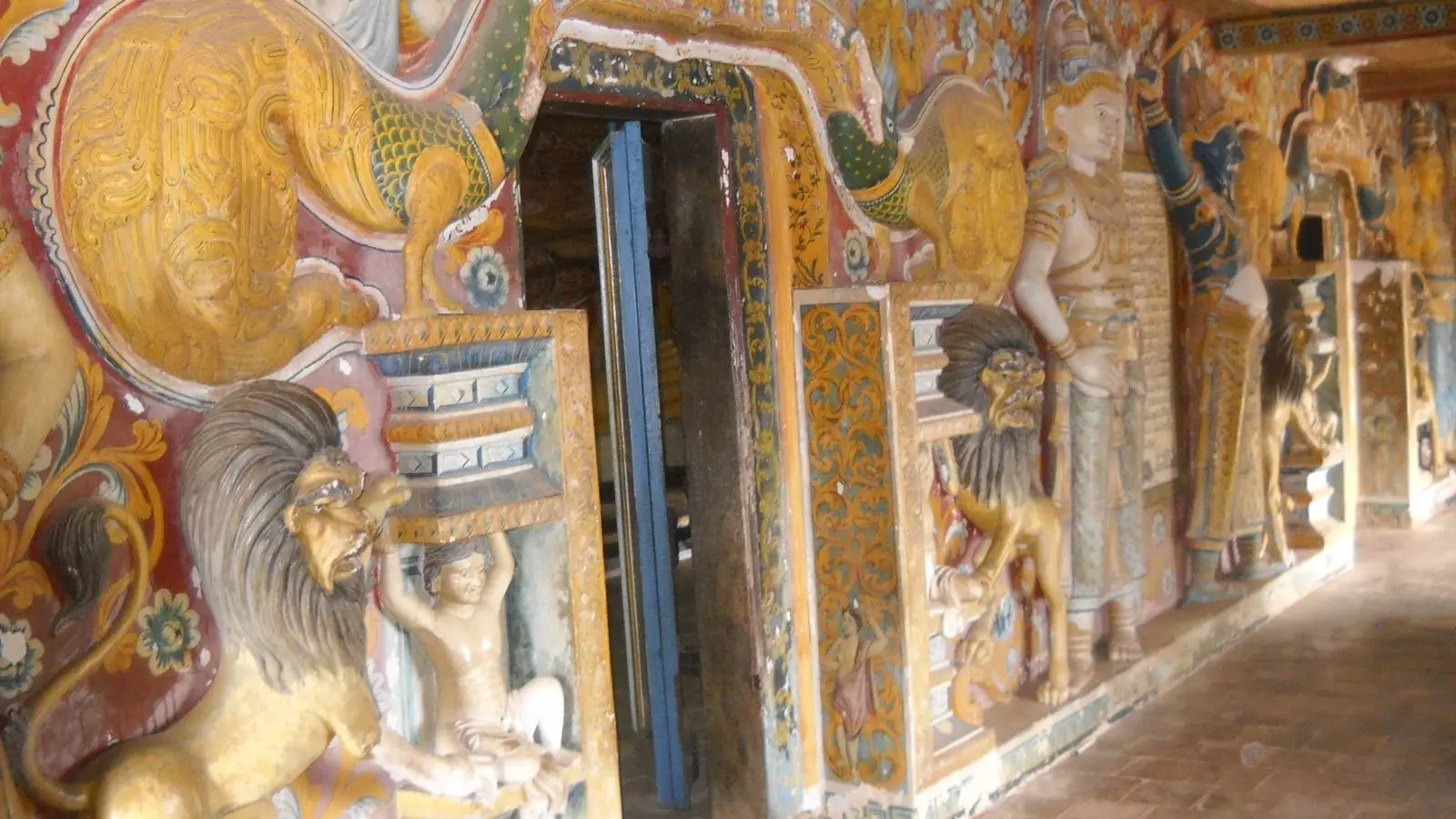
You reach the top by a long staircase—more than 500 steps. Along the way are terraces, caves, old gateways, and statues. There are seven cave temples in total, each with its own story. Inside are images of the Buddha—seated, standing, and reclining—while the walls carry vivid murals that have watched the centuries go by.
From the summit, the view stretches over the jungle. The calm is disarming; it feels as if time pauses here.
Historians date the monastery to the 3rd century CE, during the reign of a king named Saddhatissa. Over the centuries the temple was rebuilt, expanded with new chambers, and its walls were painted. It flourished in particular under the Kandyan kings—a late period in Sri Lanka’s history known for its artistic traditions.
Today the site is protected by the state as an important monument. It is open to visitors and draws both pilgrims and travelers.
The murals are the real showstopper. They recount episodes from the Buddha’s life and his previous incarnations, rendered in a style distinctive to Sri Lanka. The colors have faded a little, yet the scenes remain clear and expressive.
Beyond the paintings, the caves hold wooden columns, carved arches, old doors, and statues. Much has survived from earlier times, creating the quiet sense of stepping into another era.
For all its deep past, the monastery is still relatively little-known. It doesn’t draw the crowds of Sri Lanka’s headline sights, such as Sigiriya. That turns into an advantage: it’s peaceful here, without throngs, and the atmosphere comes through unfiltered.
From the nearest town of Tangalle, it’s roughly a half-hour by car. The climb isn’t the easiest, but there are places to pause along the way, and the panorama from the top repays the effort.
Mulkirigala appeals not only to travelers. Anyone interested in history, culture, or Buddhism will find something genuine here: ancient murals, cave shrines, and the rock itself, which people have been ascending for centuries.
It’s also a rare case of nature and architecture working in concert. The rock isn’t just a foundation for building—it is part of the temple. That unity comes through in every detail.