
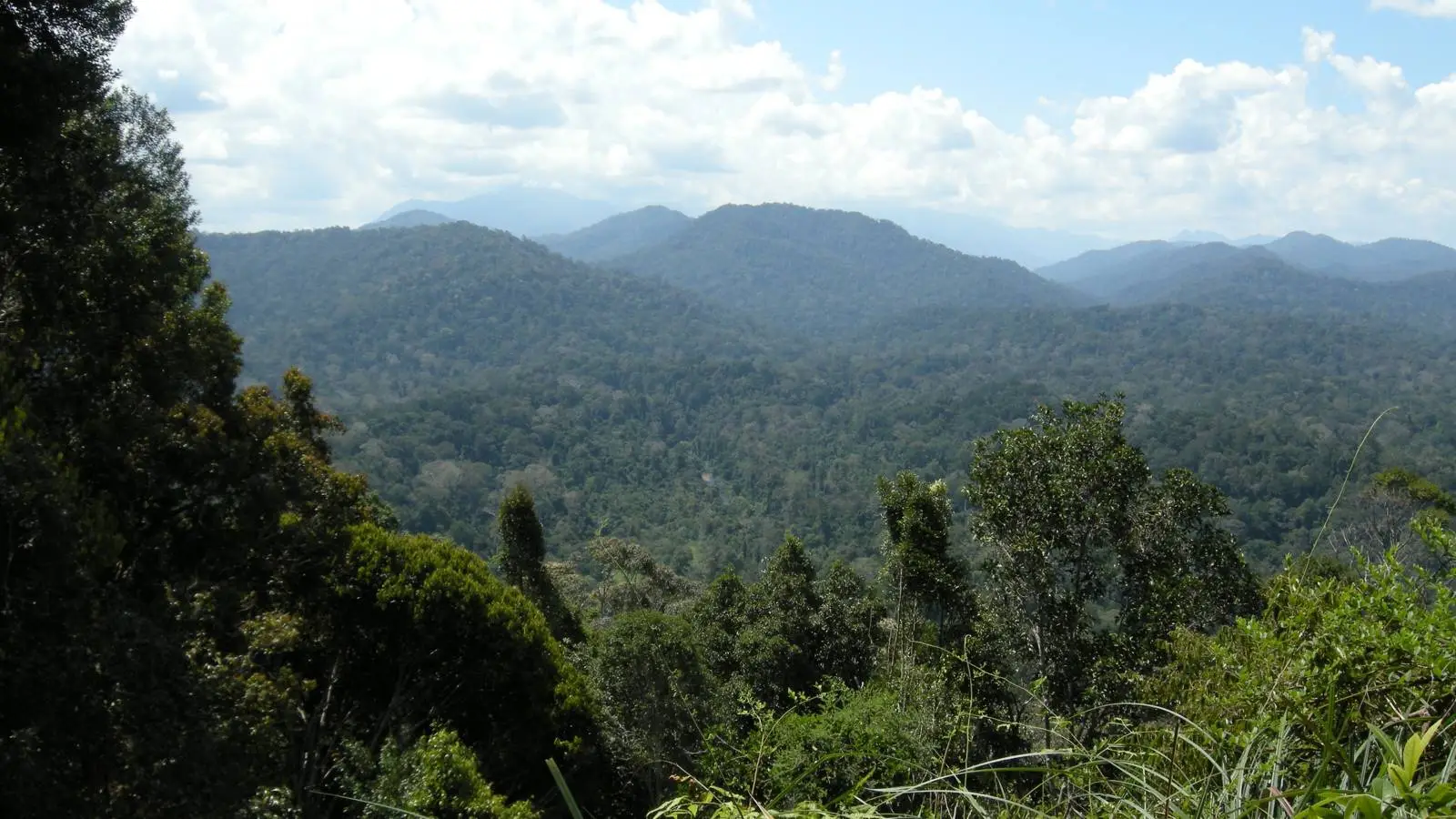
Explore Taman Negara, Malaysia’s 130-million-year rainforest, and Belum–Temenggor. Why these ancient ecosystems matter and how you can help to protect them.
When we picture something truly ancient, our minds go to pyramids, lost cities, or prehistoric art. Few people realize that Malaysia shelters a forest that predates all of that. At roughly 130 million years old, it ranks among the oldest tropical rainforests on Earth.
This extraordinary forest—Taman Negara—sprawls across three Malaysian states: Pahang, Kelantan, and Terengganu. It covers more than 4,000 square kilometers. To put that in perspective, it’s roughly the size of four Moscows rolled into one forest.
Its defining trait is its continuity. It has endured for millions of years with barely a ripple of change. The reason is simple: no volcanoes, no glaciers, no natural disasters came here to tear it apart. Season after season, year by year, it just kept growing.
Here, age isn’t just a number. It means the forest shelters plants and animals found nowhere else on the planet. Scientists note that in places like this, nature seems to keep a record of itself with every new species it shapes. It’s hard not to see it as a living archive.
Alongside Taman Negara stands another ancient Malaysian forest—Belum–Temenggor. It is also about 130 million years old, preserved since the time when dinosaurs still roamed the Earth.
For all its apparent timelessness, these forests face modern pressures. Roads, logging, and a changing climate can damage what took millions of years to form.
The harsh truth is that such ecosystems do not grow back as they were. If they are destroyed, the same rich and singular world will not return.
Forests like this clean the air, help stabilize the climate, and keep the water cycle going. They are, in many ways, the planet’s lungs, working for all of us. If they disappear, the effects will be felt far beyond Malaysia.
For 130 million years, this green giant has endured—outliving dinosaurs, ice ages, and the rise and fall of civilizations. Whether it survives even the next thousand years now depends on us.