
Explore Macau's extreme population density: who lives there, how housing and transport cope, the role of temporary workers, and what aging means for its future.
When talk turns to cities crammed with people, Tokyo or New York usually springs to mind. Yet there’s a tiny corner in southern China that outpaces almost all of them in residents per square kilometer — Macau. It may look compact on the map, but life here hums on every meter.
Macau is a special administrative region of China on the coast. It covers roughly 30 square kilometers and is home to nearly 688,000 residents. That works out to more than 20,000 people per square kilometer, and some sources put the figure close to 24,000. For comparison, Moscow averages about 5,000 — four to five times less.
Year by year, Macau’s population inches upward. By the end of 2024 it stood at 688,300 — about 4,600 more than a year earlier. Early in 2025, the number edged down to 687,900. The dip wasn’t a wave of departures, but a slight decrease in temporary workers and students arriving from elsewhere.
These temporary residents carry real weight in the city’s daily rhythm. They staff hotels, restaurants, and casinos — no surprise in a place where tourism and entertainment set the pace.
On such dense ground, few enjoy sprawling homes. The average household counts about 2.85 people, and nearly three quarters live in homes they own. Around 20% rent.
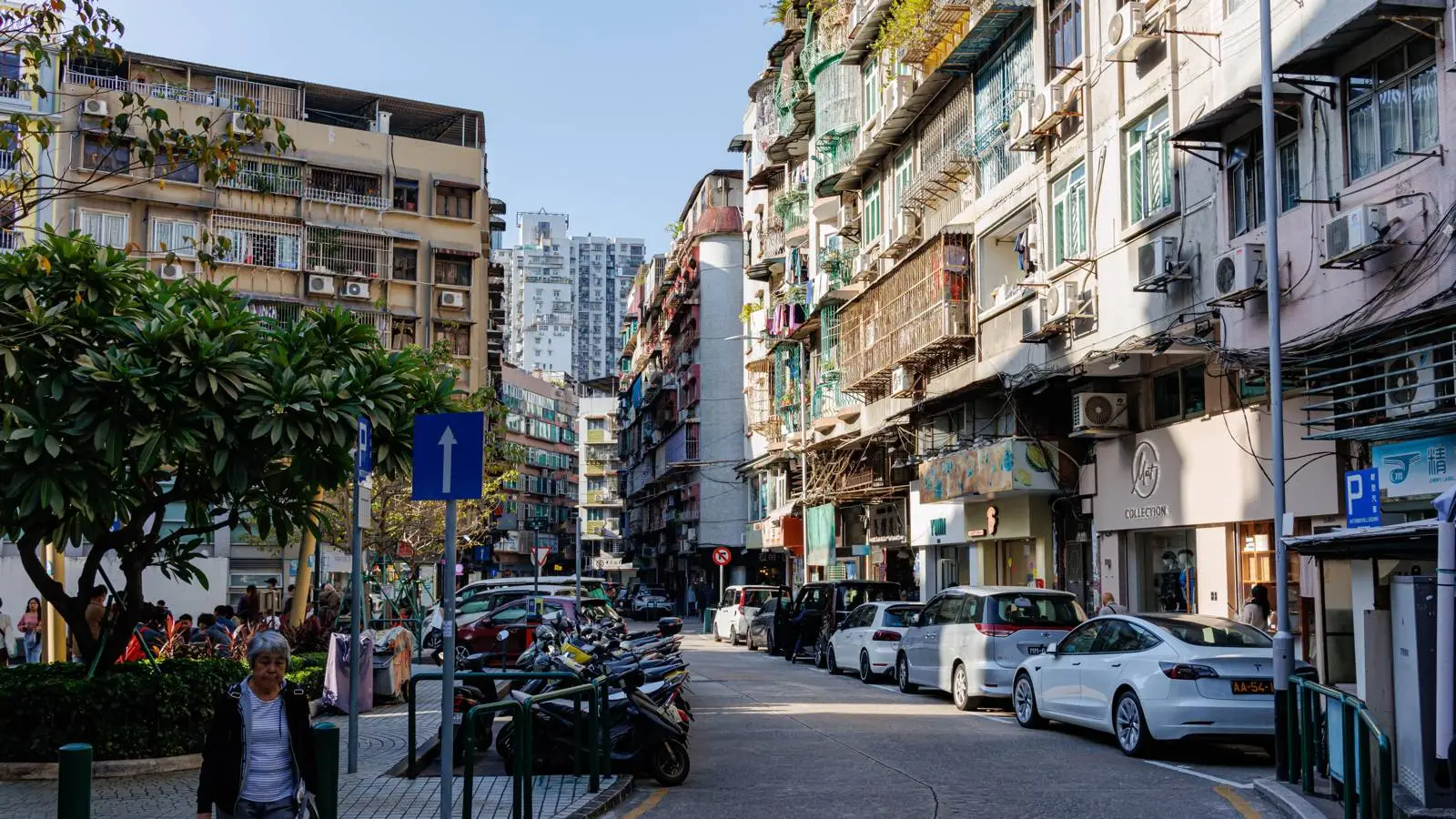
Most apartments are modest and stacked in high-rises. A private yard is a luxury. Macau is a city built upward: towers, roads, and malls layered tight. It feels as if every square meter has a job to do.
Women outnumber men, making up roughly 54% of the population. Children under 14 account for about 12.5%, while those over 65 are nearly 15%.
The city is gradually aging. Against that backdrop, temporary workers matter even more — generally younger and mobile, they keep the economy moving and step into roles that need more hands. In early 2025, there were more than 183,000 such workers in Macau.
When so many people live so close, order matters. Macau leans on solid public transport and walkable streets. Housing reaches upward, and land for new projects is literally reclaimed from the sea. Over time, the city has been adding ground just to keep pace.
Density isn’t only a headcount. It’s noise, thin air, lines, and steep housing costs. Green space is scarce and privacy slimmer still. Parking, roads, and shops operate near capacity.
For now, the city holds the line, but the obvious question looms: what next? The population is aging, prices are climbing, and the economy leans heavily on tourism. If the flow of temporary workers slows, Macau could run into serious headwinds.
The outlook is uncertain. The city may continue expanding by creating new land. Or it may have to rethink how it builds, lives, and works. One thing seems clear: Macau is pushing the limits of what’s possible, a rare case study in how many people can share a tiny patch of earth.
Macau isn’t just casinos and tourism. It’s a city in a state of constant adjustment — and the ideas forged here may well prove useful to other overcrowded cities of the future.