
Explore Lake Sevan in Armenia across summer, winter, spring and autumn: warmth, ice, and quiet shores. Discover why this high-altitude lake changes each season.
In Armenia, almost two kilometers above sea level, stretches vast Lake Sevan. It is so large that it is considered the biggest in the entire Caucasus. But size isn’t the main thing here — it’s the changeability. In summer, Sevan is warm, bright, alive; in winter it is cold, calm, seemingly asleep. It feels like two different places that are, in fact, the same lake.
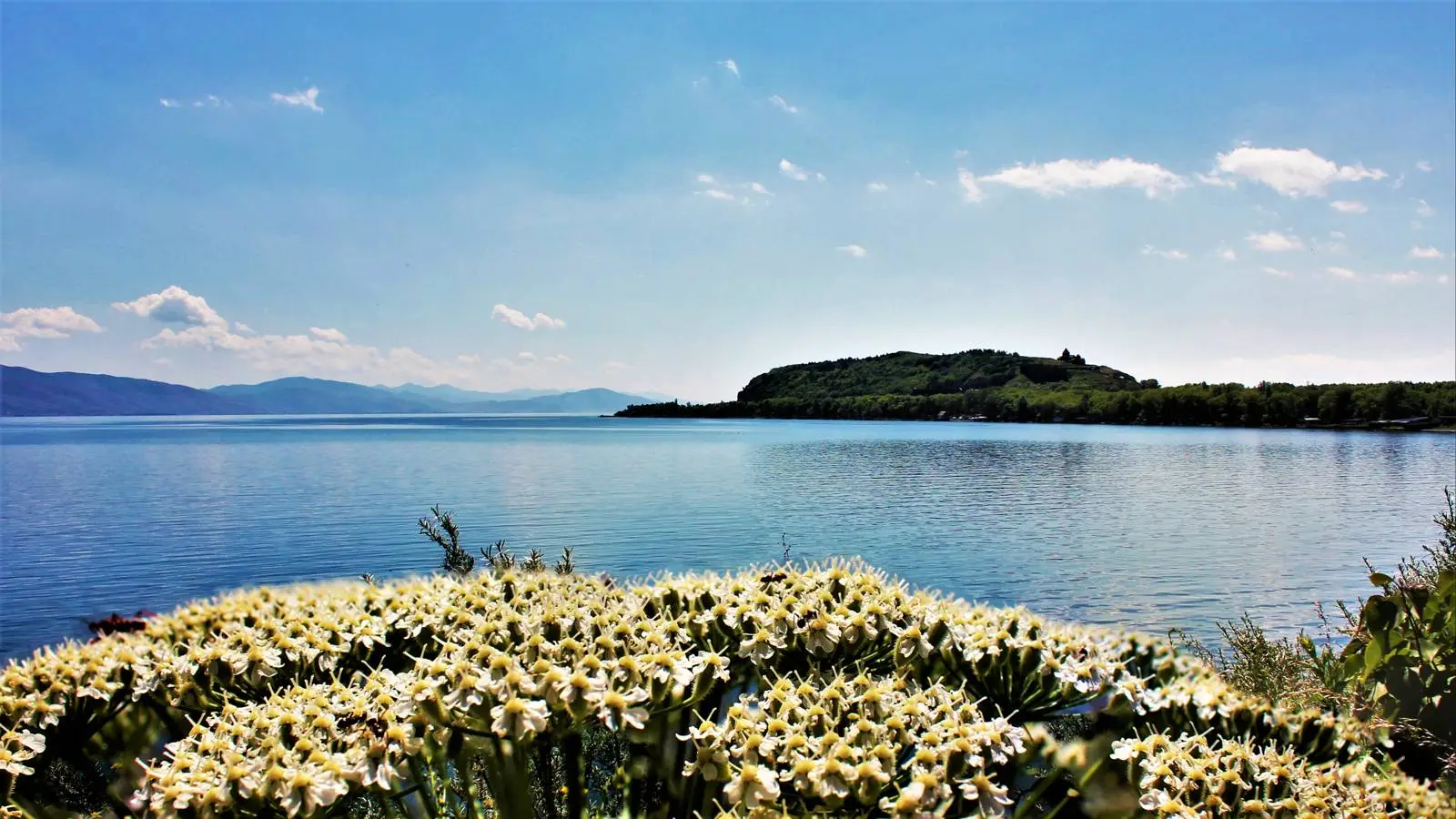
The summer months at Sevan are a genuine celebration of nature. In July and August, the air warms to about 28°C, and the sun holds for most of the day. People come to swim, sunbathe, and take boats out. The water is warm, the shores are green. Everything stirs, hums, and rustles.
Locals often refer to Sevan as the Armenian pearl, and in summer that feels especially true. Tourism is in full swing, beaches are open, the landscape comes to life. But the bustle brings a load of its own: more people mean more litter, more noise, more movement. The lake and its inhabitants feel that pressure.
In winter, the scene changes sharply. Temperatures can drop to -10°C. In December, snowfall comes nearly every other day. The lake skins over with ice, the air turns frosty, and everything around grows pale with snow.
No clamor — only ice, wind, and silence. Locals note that in winter the lake seems to sleep. Tourists are few, nature pauses. The mood is different: tranquil, with a hint of severity.
With spring, the snow melts and the awakening begins. The lake gradually thaws, birds appear, trees green up. In autumn, the opposite happens: everything slowly prepares for rest. The water cools, days grow shorter, colors fade.
These are the lake’s hinge moments — neither summer nor winter, but something in between, and engaging in their own way.
Sevan is not just a beautiful lake; it is unique. Almost all the water that reaches it later evaporates — a rarity. And because Sevan sits high in the mountains, it has a climate of its own: very cold in winter and moderately warm in summer. These swings affect plants and animals, and even how people use water from the lake.
In winter, nature rests; in summer, it wakes. That rhythm matters. It is easy to disrupt and hard to restore.
Sevan changes every season. In summer it is lively and loud; in winter, quiet and peaceful. In spring and autumn, it is transitional, a little enigmatic. It feels less like a mere lake and more like a living being with its own rhythm.
Even if you have never been to Armenia, the contrast is easy to imagine. Sevan shows how heat and frost, motion and stillness can coexist in one place — all parts of a single, larger natural cycle.