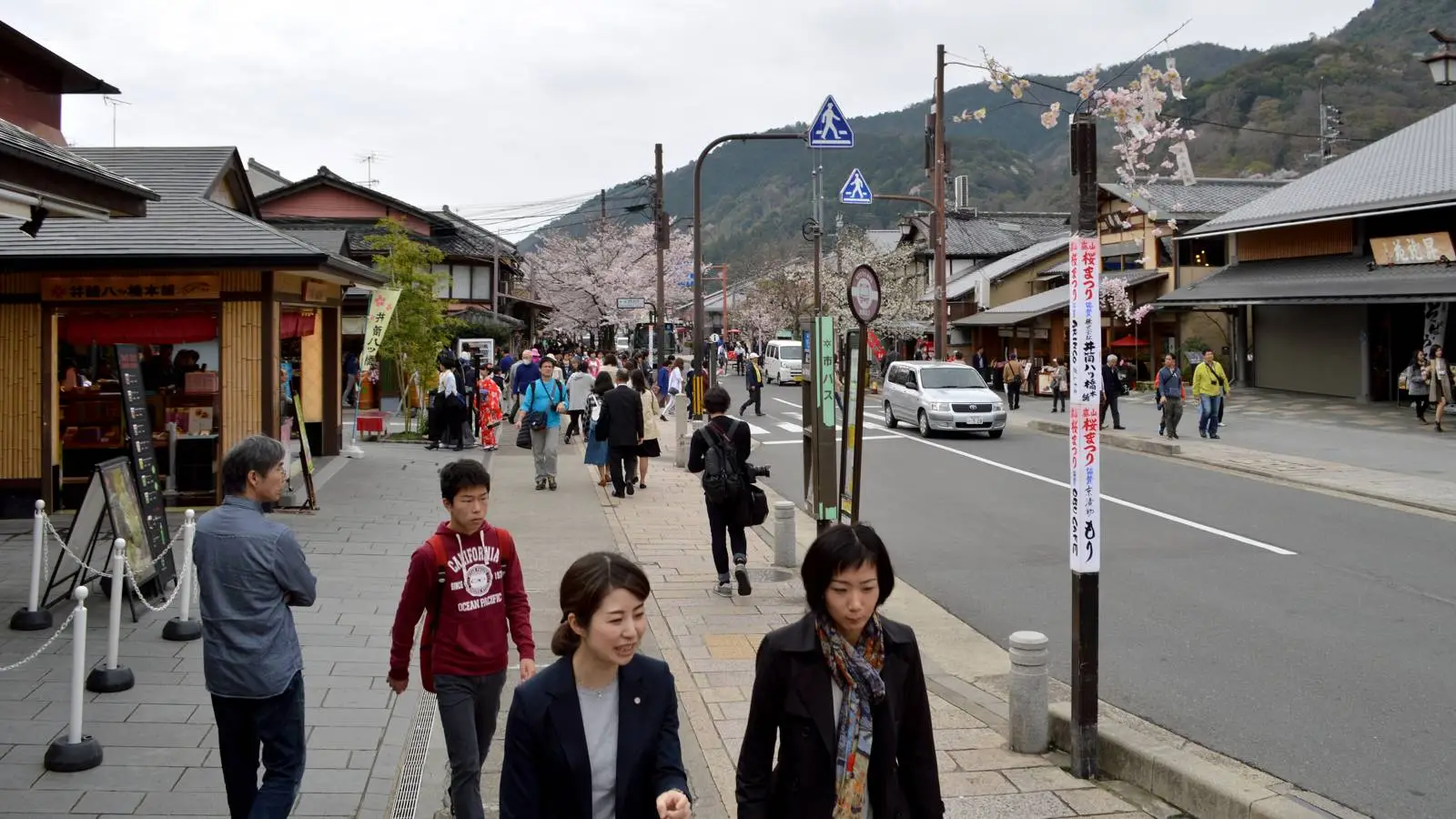
Discover how Kyoto keeps millions moving without gridlock: pedestrian-first streets, Tourist Express buses, subway nudges, bike rentals, and crowd forecasts.
Kyoto is more than a postcard city of temples and hushed lanes. It’s one of Japan’s most visited destinations, welcoming millions each year. Before the pandemic, arrivals climbed to as many as 43 million annually, and the crowds are growing again. In most places, numbers like that choke streets and bring traffic to a crawl. Kyoto tells a different story: the city isn’t suffocating under cars or gridlocked roads. How does it pull that off?
City leaders decided the best way to move is on foot. Several years ago they launched a program called City for Pedestrians. The aim is to make wandering the city easier and reduce car use. Wayfinding is being improved, new sidewalks are added, and zones without car traffic are expanding.
To keep daily life running smoothly for locals, Kyoto runs special Tourist Express buses on weekends and holidays. They shuttle visitors between the headline sights and don’t interfere with the regular routes residents rely on.
A forecasting system also flags where crowds are likely to form, drawing on mobile phone data and weather forecasts. That lets people pick a calmer time or a quieter spot for their outing.
Buses used to be the weak link. Locals in particular struggled to get to work when vehicles filled up with tourists. To change that, the city scrapped popular bus-only passes and introduced a combined subway-and-bus ticket instead. The nudge pushes more riders underground, easing the load on buses.
Officials are also weighing a pricing tweak: tourist tickets could be slightly more expensive than those for residents. It’s only a proposal for now, but it could help balance demand later.
Kyoto is an easy place to ride. Bike rentals are widely available, and more people are opting to pedal. The city is also building out a park-and-transfer system: drivers leave cars at designated lots and continue by bus, subway, or bicycle.
Of course, it isn’t flawless. The city lacks enough drivers and vehicles to keep up with rising demand, and rush hour can still make boarding a bus tough for residents. Visitors may also be disappointed by the end of cheap bus-only passes, which made travel more affordable.
Kyoto’s core insight is straightforward: let tourist flows go unmanaged, and everyone loses. So the city keeps testing ideas, adjusting, and looking for fixes. It wants to preserve its character rather than turn into a tourist trap, and to stay comfortable for both guests and residents. Prioritizing feet over fenders may sound simple, but it’s a quietly ambitious bet—and so far, it seems to be paying off.